Sunday, December 2, 2018

Balkan Road Trip - 06. Kotor, Montenegro


We saw exactly why Montenegro is called Montenegro the moment our bus crossed the Albanian border into this small nation of brooding dark mountains, rugged, barren and frighteningly steep.

The modern name betrays a Venetian past when seafarers coined this land of tall impassible peaks between the lush greenery of Dalmatia and the arid rolling hills of Albania. The Slavic-speaking locals also embraced the name as Crna Gora, or Black Mountain, even though their land also encompassed arguably the most breathtaking stretch of the Adriatic coastline.

This was our homebase in Montenegro, part of our 22-day itinerary along the Balkan coast from Albania to Slovenia. Here we stopped for two days at the fjord-like Gulf of Kotor, home to the second most spectacular port city in the Adriatic in my opinion, with Venice being the lone exception.
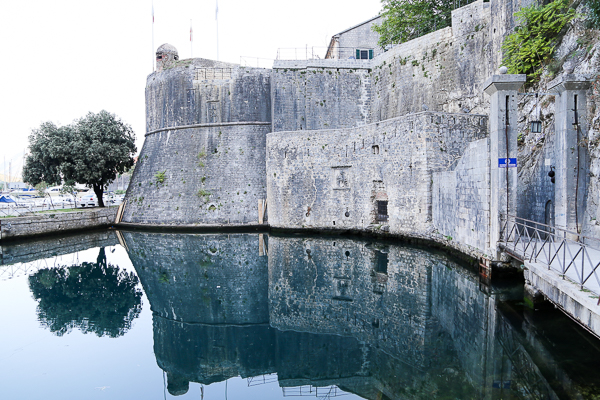

Some readers may disagree in favor of world-famous Dubrovnik, by far the most popular tourist destination in the Western Balkans and a fellow UNESCO World Heritage Site, situated 60 km to the west. But while Dubrovnik flaunts her majestic ramparts on the sea cliffs, Kotor strings hers several kilometres up the soaring peaks guarding her back. To me Kotor is nestled in a more dramatic natural setting, costs less for food and lodging, and is less overrun with tourists -- for now.
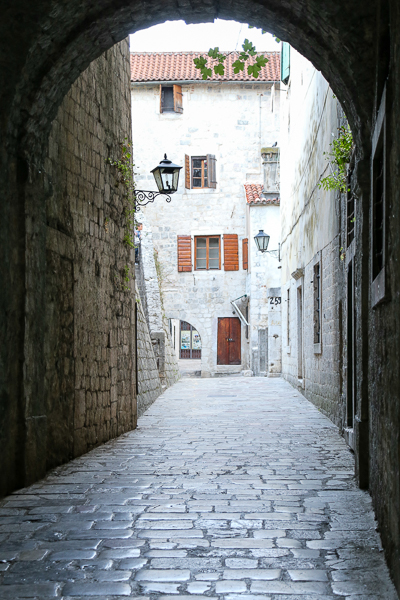

We arrived after a grueling 7 hour bus ride from Tirana and found our rental apartment just 100m inside Kotor's southern gate. After a late lunch of cheap Cevapi we were on the move again, this time hopping on a local bus to Perast for a short sail in the sunset.
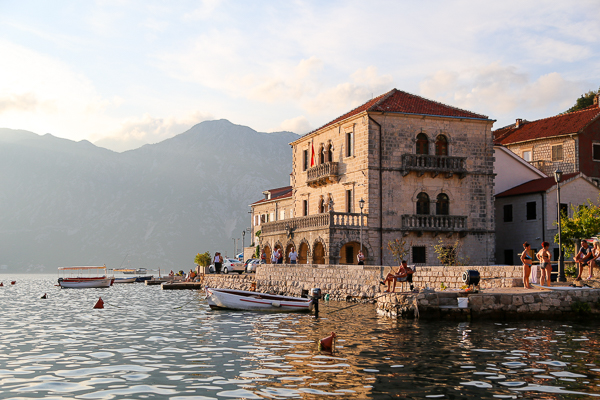

A dozen kilometres north along a winding coastline, tiny Perast enjoys worldwide fame disproportionate to its 350 residents for its iconic twin islands floating in the bay's sheltered waters, just a few hundred metres off a riviera ornamented with Baroque palaces and a quiet marina.


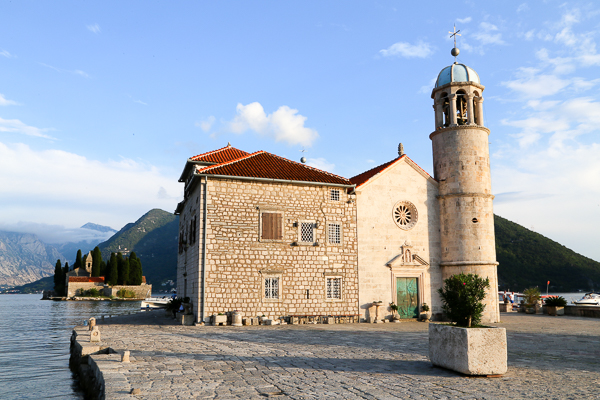
Several boats shuttle visitors from Perast to the farther island known as Lady of the Rocks, artificially created over the centuries by local sailers who vowed to deposit a rock at the island upon safe return from each voyage.
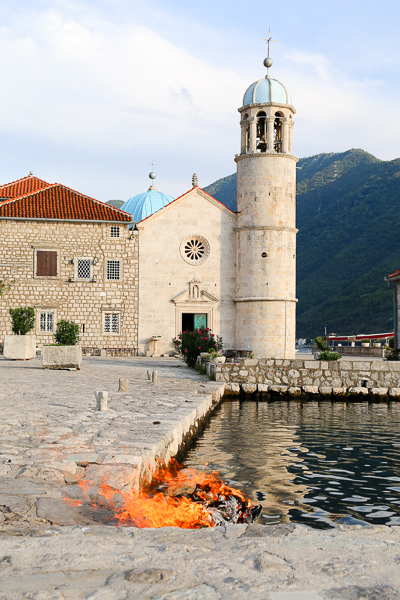

That medieval rite still comes alive every year on July 22 when local fishermen set sail at sunset to shore up the island by hauling rocks into the sea. In case anyone is wondering how these two flat islands manage to stay above water during high tide, the difference between high and low tide is apparently a few centimetres in the Bay of Kotor.
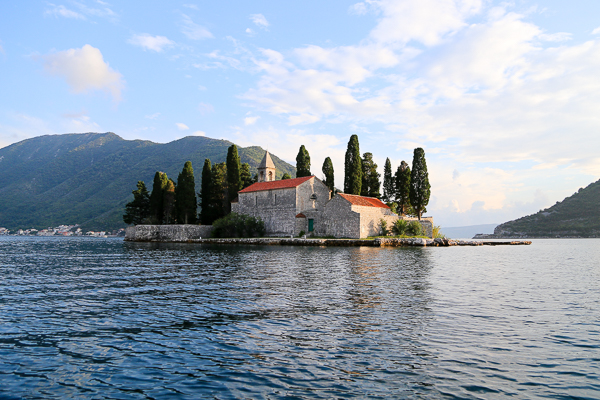

In stark contrast with the Baroque elegance of the Lady of the Rock, the neighbouring island of St. George features an austere, masculine abbey that once served as Perast's first line of defense agasint Ottoman threats. Historic graveyards of local citizens still surround the 12th century Benedictine monastery, giving rise to the moniker the Island of the Dead.
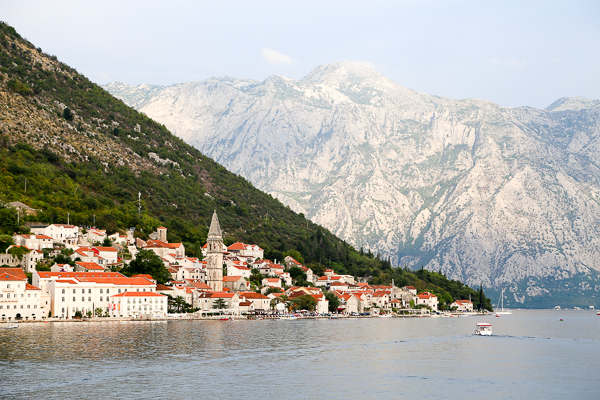

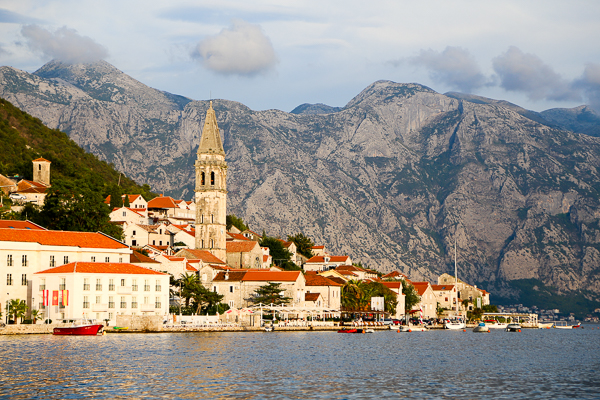
This 5 euros boat ride offers the best panorama of Perast as a 17th century waterfront town, dominated by the clock tower of St. Nicholas and shimmering under the setting sun with Montenegro's vertical, barren mountains as the backdrop.


Back on dry land we hiked up the steep stairs of sleepy Perast, still boasting its collection of Venetian watchtowers from a tense era when the town served as Kotor's outpost against Turkish-held Herceg Novi to the west.


Perast's twin islets -- one artificial and one natural -- glittered in the sunset while boats collected the last remaining passengers back to shore. It was time for dinner, and we decided to try out a local restaurant before heading back to Kotor.

Restaurant Review: KONOBA SKOLJI (Perast) (Location Map)
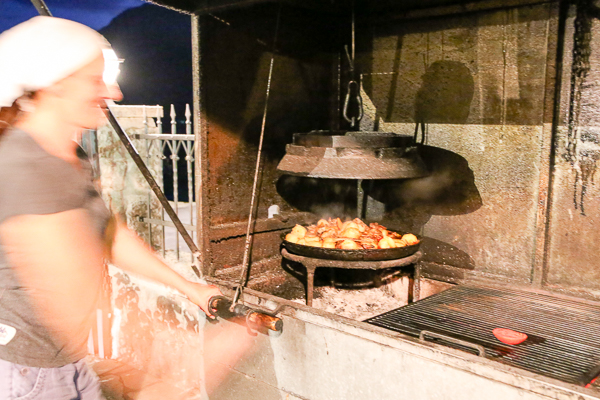
We picked this restaurant for one quintessential Dalmatian dish, the ancient culinary art of the Peka in which meat and root vegetables are seared and slow-roasted at once under a heavy cast iron lid, until all ingredients start to melt towards a delicious finish.


But first we must acclimatize to Kotor prices after several days in ultra-affordable Albania. 6 euros for this local fish soup of Riblja Corba might have been reasonable for tourist-oriented Perast or Kotor, but was at least twice the price compared with Tirana where we enjoyed possibly our best meal of the year the previous day.


My wife ordered this generous dish of grilled prawns, served with the Dalmatian classic of Swiss chard and potatoes that we would encounter a dozen times over the next two weeks. The prawns might have been Mediterranean or even Adriatic in origin judging by their depth of flavour.
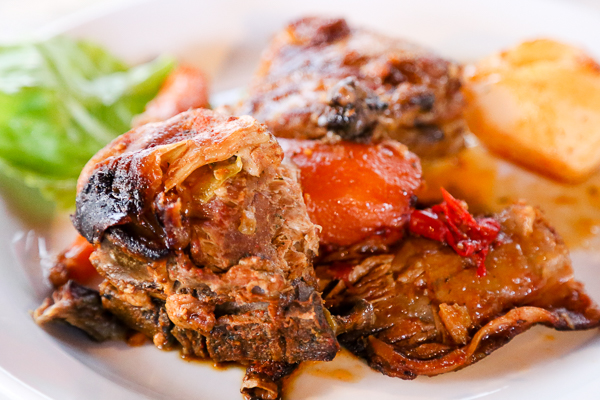

Virtually every table ordered the same signature dish of Lamb and Potatoes under the Peka, patiently roasted in its own juices to achieve that legendary melt-in-the-mouth texture. It was a hearty meal that neither of us could entirely finish before catching the next hourly bus back to Kotor for the night.

Meal for Two Persons
Riblja Corba6 Euros
Grilled Prawns20 Euros
Lamb Peka14 Euros
Bottled Beer x 26 Euros
Large Water3 Euros
TOTAL49 Euros (CAD$73.5)


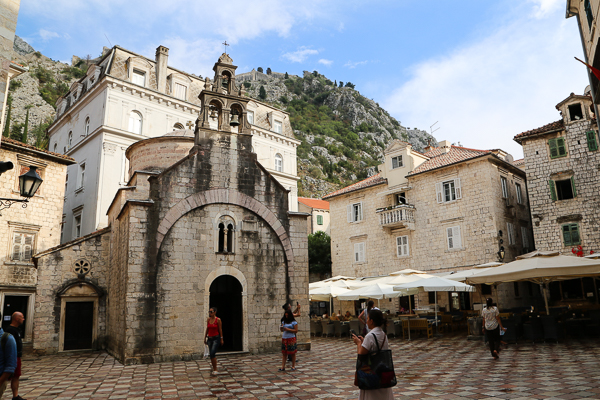
Back in town the one unmissible attraction is Kotor's mini-Great Wall featuring kilometres of knee-busting stairs, a two-to-three-hour hike with world class panoramas to be reviewed in the next post. The medieval walled city itself also boasts a number of impressive monuments including the pictured 12th century Romanesque church of St. Luke's.
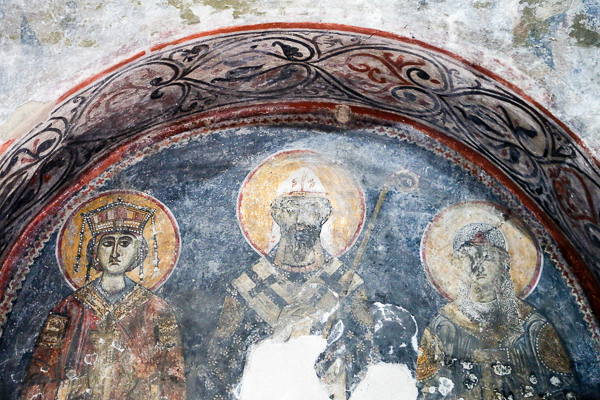

Having endured countless earthquakes including one of 6.9 magnitude in 1979, the chapel's priceless 800-year-old frescoes and two altars -- one Orthodox and one Roman Catholic -- still serve as a symbol of unity and religious tolerance in Orthodox-dominant Montenegro.

On this day we had a cheap takeout lunch (see next post) for the hike, which left us with a generous budget for dinner at what is rumoured to be Montenegro's finest restaurant.

Restaurant Review: GALION (Kotor) (Location Map)

We normally don't splurge on so-called fine dining establishments on our travels. First we don't have the budget, but more importantly we have learned over the years that the most expensive restaurants, in efforts to differentiate and justify their higher prices, tend to drift away from the most authentic, time-honoured recipes of their region.

But at Kotor the price disparity between middle-of-the-road and the finest restaurants is curiously nonexistent, as revealed by the 6 euros Riblja Corba at Konoba Skolji last night. The same dish cost 5.9 euros here at Galion, served by a crew of impeccably dressed waiters at a classy dining terrace on stilts above the crashing waves, with romantic sunset views of the Bay of Kotor.
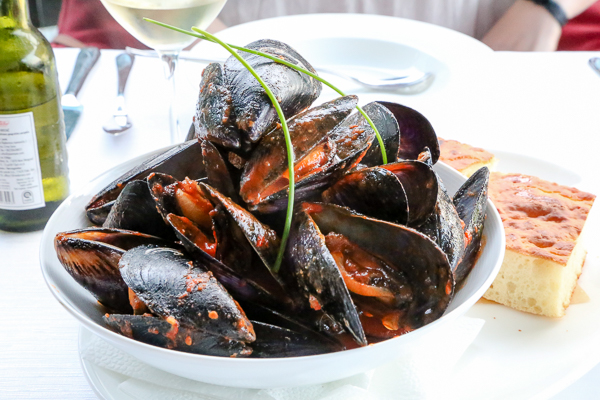

As expected the food trended towards modern Pan-Mediterranean rather than traditional, unfaultable to the point of unremarkable as typified by our pot of Mussels Buzaru which almost passed for Provencal with its liberal usage of tomatoes, white wine and thyme.
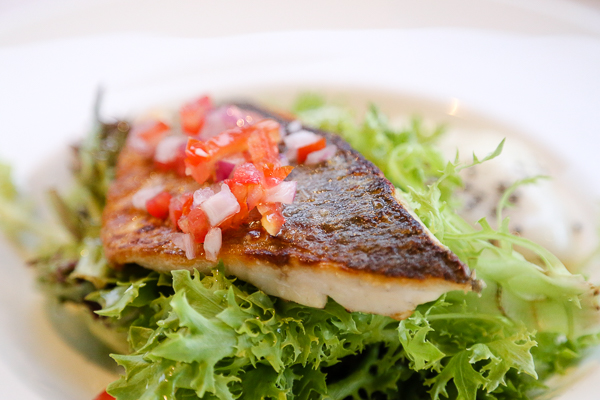

My wife had the intuition to order this green salad topped with an expertly pan-fried sea bass fillet, absolutely fresh with a deliciously crispy skin. Again this might not be traditional Montenegrin fare, but it was so perfectly executed that it was by far the best dish of the evening.
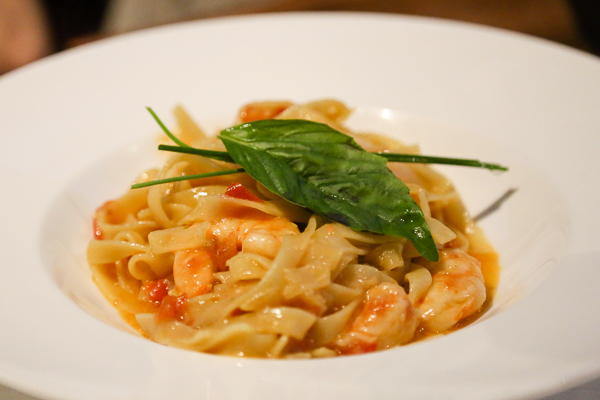

With the phenomenal Linguine con Gamberetti at Tirana's Markata e Peshkut still fresh in memory, my wife took a chance on the local interpretation of Spageti sa Gamborima that turned out mildly anticlimactic. The pasta was actually decent and the shrimps fresh, but the expectation was simply too high when the gold standard was an unparalleled dish in Tirana that cost a third of the price here.
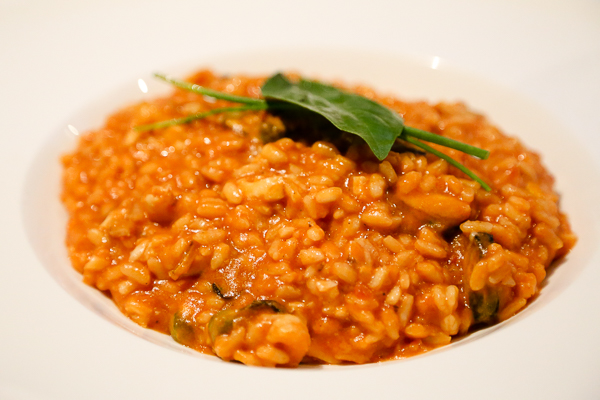

With a creamy seafood risotto we wrapped up this dinner of two large appetizers and one soup to share, pasta and rice for mains and a couple glasses of local Krstac, with water level panoramas of the Bay of Kotor and a guitarist performing Elvis and Sting classics in the background. I didn't realize at the time, but our final bill of 33 euros per person would be a steal compared with the exorbitant prices at our next stop of Dubrovnik.

Meal for Two Persons
Musulje na buzari10.9 Euros
Brancin salata11.9 Euros
Riblja corba5.6 Euros
Spageti sa gamborima13.9 Euros
Rizoto sa plodovima mora13.8 Euros
Glass of Krstac x 210 Euros
TOTAL66.1 Euros (CAD$99.2)


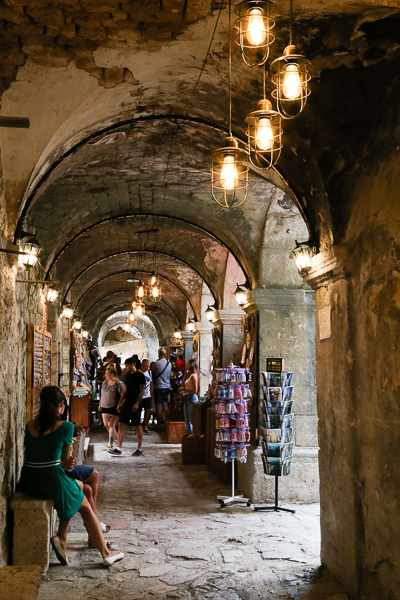
Our after dinner stroll took us through the medieval alleys of Kotor to the Pima Palace, a 17th century Renaissance mansion presiding over a little square to the side of the cathedral. The hordes of day-trippers would not return until the morning, affording a few hours of peace and authenticity for the former Venetian citadel of Cattaro.
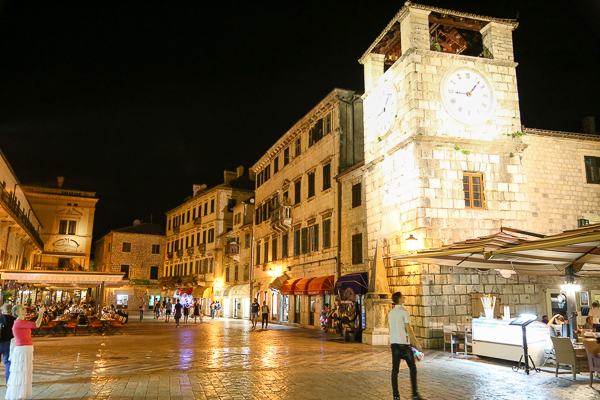

Even the main square appeared uncrowded for once after the multi-national flocks of tourists sailed off on their Mediterranean cruises, predictably en route to Dubrovnik or perhaps Bari. It was this charming atmosphere on evenings and early mornings that made our two night stay in the medieval town worthwhile.
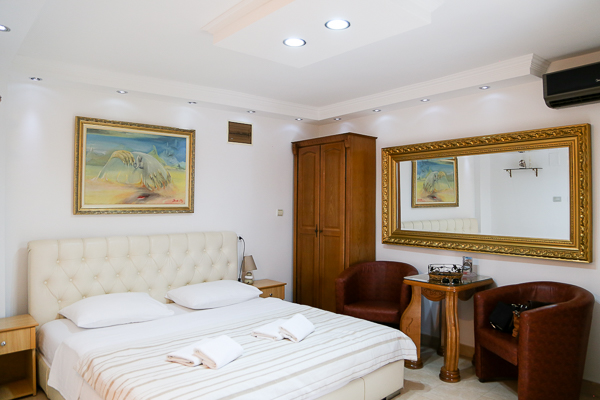

Thankfully our rental apartment -- realistically a glorified bedroom suite with a tiny kitchen counter -- was just a five minute walk from the bus station where our early morning bus to Dubrovnik would depart. We left Kotor with wonderful memories especially of the amazing hike, as tiring as it was, that will be the dedicated subject of the next post.

IF YOU GO

Kotor is easily accessible via the nearby airport of Tivat which is served by EasyJet and a number of cheaper airlines. Those on a cross-country backpacking trip like ourselves can connnect with long distance buses to Dubrovnik (3.5 hours), Tirana (7 hours), Podgorica (2 hours) or even Mostar (5 hours via privately run minibuses).

Friday, November 23, 2018

Balkan Road Trip - 05. Tirana, Albania


I received nothing but quizzical looks when I told a select few friends that we're vacationing in Tirana.

Tirana? Are the hotels still wire-tapped? And isn't that the car theft capital of Europe? My smartass friends quipped.

"Cars don't get stolen in Tirana," I countered. "It's where stolen cars go." Of course there is -- or was -- some truth in that joke, but to me it doesn't make Tirana any more unsafe than say Athens.


A month later we returned with fond memories of a vibrant European capital that became my wife's second favorite city in the Balkans after the haunting Mostar. As of 2018 Tirana is very safe yet remains fun in a disorganized way, and offers fantastic modern gastronomy at unbelievable prices.


Nearly 30 years after the fall of communism, Tirana still remains in the backwaters of international tourism, though that is rapidly changing with increasing numbers of visitors from Eastern Europe and Italy. Most touch down at Tirana's airport; some arrive on luxury cruises at nearby Durres; very few take the highway bus on cross-country road trips like we did.


Those skeptical about Tirana's rise as a bonafide tourist destination should first acclimatize at the revamped Pazari i Ri, textbook example of urban revitalization in which a crumbling, unhygienic wet market was successfully transformed into a chic entertainment hotspot full of upmarket cafes and restaurants, aspiring to become Covent Garden of the Balkans.


Its legions of street hawkers have now been gentrified into a modern glass-roofed bazaar known as Markata e Gjelber, still peddling fresh and dried fruits from the nearby countryside, fish from Durres and an eye-opening selection of fiery Raki. We were looking for a cheap lunch of grilled Qofte before being convinced by the freshness of the fish that this would be the perfect place to splurge on a seafood meal, which turned out to be the best idea.

Restaurant Review: MARKATA E PESHKUT (Tirana) (Location Map)

We both agreed -- this was our favorite restaurant of our 22-day journey through 6 countries in the Balkans.

I don't care for the polarizing reviews on TripAdvisor and Google. Over 22 days we sampled numerous seafood eateries along the Balkan riviera from Montenegro to Dalmatia to Istria, and this upmarket fish restaurant in Tirana was our top choice for its wonderful flavours as well as an unbeatable price-to-quality ratio.


If sweetness and stickiness to the tongue are the best indicators of absolute freshness in raw shrimp, these trio of Adriatic prawns in our Crudo di Pesce would rival the freshest Botan-Ebi-no-Sashimi in Japan, almost relegating to afterthought the incredibly tender octopus, softly blanched cuttlefish and squid, vinegared anchovies and mouthwatering Albanian olives from Berat.

And here's the kicker -- this platter of Crudo di Pesce for two cost just 830 Leke or 6.5 euros, a fraction of what one would expect in Rome.


After a creamed soup of white fish that turned out decent but unspectacular, my wife ordered a caesar salad topped with generous strips of sharp Kashkaval cheese and three mid-sized but superbly flavorsome shrimps that tasted of the Adriatic Sea. The price? Just 400 Leke or 3.1 euros.


And most surprisingly, possibly the best pasta sauce either of us have ever tasted within or outside of Italy.

The perfectly al dente linguine was no surprise at a restaurant of this calibre, as was the small hill of painstakingly peeled baby shrimps. But it was the thick sauce of masterfully condensed shrimp essence -- shell, caviar and all -- that became one of our most delicious memories of the entire 22 day journey. A month later and I'm still dreaming of this dish that cost an amazing 500 Leke or 3.9 euros. I'd be willing to pay four times that price in Rome.

Meal for Two Persons
Crudo di Pesce830 Leke
Fish Soup300 Leke
Caesar Salad with Grilled Shrimps400 Leke
Linguine con Gamberetti500 Leke
Table White 0.5L500 Leke
Bottle of Spring Water200 Leke
TOTAL2730 Leke (CAD$32.1)


Minutes after a classy seafood lunch at the 21st century glass-roofed bazaar, we descended into the darkest era of Albania's communist past at Bunkart 2, one of two subterranean museums dedicated to exposing the classified secrets of the old People's Socialist Republic. The entrance's roof still bears the scar of rioting demonstrators of the past, preserved here for an extra dose of realism.


Housed in a multi-level bunker designed to withstand nuclear attacks from both America and the Soviet Union, the 1000-square-metre dungeon was affiliated with Albania's secret police during Enver Hoxha's reign, complete with a clandestine backdoor into the bowels of the Ministry of Internal Affairs.


Filling the austere hallways and sombre rooms are decommissioned wire-tapping equipment and switchboards, pinhole cameras and disguised miniature firearms for assassinations. Presenting various instruments of torture, video interviews of former political prisoners and records of the missing, this exhibition was nearly as depressing as Hiroshima's Peace Memorial Museum.


Gasping for fresh air we re-emerged at the expansive Skanderbeg Square, epicentre of anti-government demonstrations that overthrew the communist regime in the early 90s. Monuments to Enver Hoxha and Joseph Stalin have since made way for national hero Skanderbeg who united Albanian chieftains against -- ironically enough -- Islamic expansion in the form of the Ottoman Empire.


South of Skanderbeg Square is the one landmark that best epitomizes Tirana's transformation, the unmistakable Piramida inaugurated as the Enver Hoxha Museum in the twilight years of communism, hosted Albania's first night clubs and free radio stations of the 90s, served as NATO command post during the Kosovo Wars before falling into disrepair. This was our last chance to see the pyramid in its original grey concrete appearance before it receives a futuristic makeover as a 21st century tech hub and incubator.


Across the Pyramid is the formerly elitist neighbourhood of Blloku that once housed Enver Hoxha and his closest circle of party officials. The tree-lined boulevards now host Tirana's highest concentration of fashionable cafes, contributing to Albania's recent claim as the nation with most cafes per capita, bettering even the Italians and the Spanish. Just one of the things Albanians can thank their old Ottoman overlords for.

For dinner we specifically asked the young concierge at our hotel for his favorite Zgara, the Albanian institution of cheap barbecue houses often frequented by cash-strapped students. We were totally blown away by Berat's Zgara Kaon the previous day, and were anxious to sample Tirana's best.

Restaurant Review: ZGARA PARKU (Tirana) (Location Map)

We would have never found this place on our own.

Tucked away in a middle class neighbourhood west of Skanderbeg Square, this stretch of Rruga e Kavajas is apparently known as Tirana's battle arena for barbecue houses. Our concierge purposely didn't recommend any particular Zgara over the others -- in his opinion it was impossible to go wrong with any of the four or five Zgare within the same block.


Once again we started with the Albanian national dish of Qofte. While these grilled meatballs did turn out well-charred as expected, they were still a notch below the gold standard of Zgara Kaon in terms of flavour and succulence to my biased tastebuds.


After a puzzling green salad with lemon slices for fruit, our barbecued wings arrived with a thick dip of Xaxiq, the Albanian variant of Turkish Cacik or Greek Tzatziki. At 350 Leke (CAD$4) this might have been the cheapest pound of wings I've ever ordered in a pub.


For the first time I found myself having pork, in the form of shish kebap, while downing an alcoholic drink in a Muslim majority country. Now this may sound completely normal for readers from Malaysia or even coastal Turkey, but for a Canadian traveler this was bragging rights territory.


Appetizers of qofte and green salad, followed by a shish kebap, wings, lamb ribs and washed down with a couple pints, and the total bill came to 1700 Leke or 13 euros for two. The next morning we would depart Albania for Montenegro and subsequently Croatia, where meal prices would easily triple.

Meal for Two Persons
Green Salad190 Leke
Qofte x 250 Leke
Pork Shish Kebap120 Leke
Barbecued Wings350 Leke
Lamb Ribs 0.5 kg750 Leke
Pint of Draft Beer x 2240 Leke
TOTAL1700 Leke (CAD$20.0)


Special thanks to the helpful and multi-lingually proficient staff at Hotel Dilos, spotlessly clean, reasonably priced and located conveniently next to the international bus station for our early morning bus to Montenegro. After traveling the length of Albania from south to north, I now have no hesitation in recommending this small and misunderstood nation to fellow travelers.

IF YOU GO

Tirana is served by a few major airlines including British Airways from London Gatwick. Those on a tighter budget like us may consider taking a cheap flight to Corfu or Kotor/Tivat and visit Tirana as part of a road trip across Albania. And remember: while Tirana serves as an attractive port of entry, the best of Albania lie further south at Berat and Gjirokaster.

Monday, November 12, 2018

Balkan Road Trip - 04. Berat, Albania


With its cascades of whitewashed houses fitted with perfectly uniform arrays of Ottoman windows, Berat may be the most visually-stunning town in the Southern Balkans and certainly my favorite destination in Albania.

Note to fellow travelers -- here we found our favorite cheap restaurant of the six countries we visited, a family-run Albanian grill house that does simple peasant dishes exceptionally well. Scroll down to the food photos if you're craving for a barbecue.


Fittingly nicknamed the City of Overlayed Windows (or Thousand Windows, depending on the translation), Berat is a UNESCO World Heritage Site and a must-see in any Albania guidebook. Situated 3 hours north of the equally picturesque Gjirokaster and 2.5 hours from the capital city of Tirana, this made a perfect stop on our south-north bus trip across Albania.


Founded by ancient Greeks and fortified by Byzantines as the Eastern Roman Empire's frontier against its Slavic neighbours, Berat eventually fell to the Ottomans in the Middle Ages and remained under Turkish rule for 500 years. Exceptional perhaps compared with the rest of the Balkans, but Orthodox Christians and Muslims have peacefully coexisted here for centuries.


This is the best-preserved town from Albania's Ottoman past with two historical quarters -- one traditionally Muslim and one Orthodox -- flanking the Osum River and a secluded third concealed within its massive 13th century Byzantine citadel atop a treacherously steep cliff.


Our furgon from Gjirokaster unexpectedly dumped us on the side of a dusty highway roundabout at Lushnje -- welcome to public transport in Albania -- where we had to cover the final 35 km to Berat by other means. A taxi driver was already hovering like a vulture at the roundabout, offering to save us from the scorching sun and the uncertainty of infrequent passing buses for 20 euros. We took up the offer, and within 30 minutes we were in Berat.


We rented a centuries-old Ottoman stone house in Berat's Orthodox Christian quarter known as Gorica, a short but steep walk up a rutted village path of medieval cobblestones. Our host Elisa led us past a heavy wooden gate into a pebbled courtyard that would be entirely ours, complete with its own breakfast table under a persimmon tree.


This simple bedroom was the most memorable out of the 13 properties that we rented along our journey -- not because it was the most spacious or decorative, and certainly not the best in material comfort without an air conditioner. It was the breathtaking view from the row of 18th century Ottoman windows that we most enjoyed.


Outside our window was a panorama of the Ottoman town of stone houses with mysterious dark windows, sheltered by the legendary fortress that graces the back of Albania's 10 Leke coin. Half-metre-thick stone walls kept the bedroom reasonably cool in the absence of air conditioning, and the rest of the house was well-equipped with a second bedroom, functional kitchen and even a washing machine.


German- and Italian-speaking groups occasionally toured through the neighbourhood's cobblestone paths, thankfully saved by the edict of the Communist dictator from the sprawl of hideous 1960s concrete blocks. With its increasing number of cheap hostels and guesthouses, this former quarter of tanners and craft guilds seemed ready to become the next hotspot for backpackers.


Across a graceful 7-arched bridge on the northern bank of River Osum, the predominantly Muslim quarter of Mangalemi -- home to many of Berat's historical mosques and Sufi shrines -- was undergoing major restorations in a government-funded revitalization programme. With the whole neighbourhood reduced to an open construction zone, we had no choice but to bypass the mosques and continue towards the hill top castle.


It took an ankle-twisting 30 minute hike through a steep obstacle course of half-exposed sewer pipes along a potholed dirt path, but it was all worth it. Awaiting at the top was not your typical castle ruins, but a living fossil of a medieval hill town, an 800-year-old isolated community of Byzantine houses with a disproportionate abundance of 15th century Orthodox churches.


The Castle Quarter's unmissible highlight is the National Iconographic Museum, housed inside an Orthodox church and showcasing dazzling gold and silver leaf icons by the great Onufri, leading icon painter of the 16th century and Berat's favorite son. Photos were not allowed, but no visitor would soon forget the golden magnificence of the centuries-old altarpieces.


The best reward for a strenuous hike is always the panorama at the top, in this case a bird's eye view of the Mangalemi Quarter directly below as well as the Gorica Quarter across the river. Getting here though was quite a story in itself.

For the first time in our years of traveling, the locals purposely misguided us as we asked for direction. And yes, I'm sure it was deliberate when the middle-aged hawker pointed me to the dodgy castle rampart above his fruit stand with a partially obstructed view and called it "Panorama." The official Panorama spot, as we stumbled upon later, was actually a minute's walk below his stand.

Perhaps it's a strategy to keep visitors going in circles and maximize their time (and money) spent at this secluded hill town, but this is not how you should build your tourism brand.


As I was busy photographing this 500-year-old Byzantine chapel precariously hugging the near-vertical cliff, a cigarette-wielding child of barely 10 years stood beside me and, while I was least suspecting, pulled the most bewildering stunt.

No, he didn't grab my wallet -- which would have been at least logical -- but reached into the depth of his pants and produced his own penis.

For the next minute or so, the kid simply stood next to me and did two things:

1) exposing his genitals
2) uttering the word money

I can't fathom what gave him the idea that exposing his penis would result in visitors paying him for his antics, but I quickly finished my photography, grabbed my wife (who fortunately didn't witness the above episode) and headed back to Mangalemi Quarter for dinner. As enchanting as the Castle Quarter may be, I much preferred the sincerity of the people we met in the lower town.

Restaurant Review: ZGARA KAON (Berat) (Location Map)

At the Mangalemi Quarter we came across one of our best discoveries of this 22-day journey, a traditional barbecue house with a specialized repertroire of charbroiled Albanian favorites. We knew this place was legit when a bunch of local construction workers came for lunch with their helmets on. Enough said.


Albania's answer to the American BBQ shack or Southern Chinese Siu Mei joint, the Zgara is a family-friendly institution serving hearty portions of expertly grilled meat at blue collar prices. The two of us shared a spicy Suxhuk, a crispy Virshle sausage and the Albanian national dish of Qofte meatballs -- the best Qofte/Cevapi of our entire Balkan trip -- all for 460 Leke (CAD$5.4).

Now this may be blasphemy for an Albanian Zgara, but here we found something even better than the meat.


This was one of my most memorable dishes of the trip, a divine plate of grilled zucchini, bell peppers and aubergine, drizzled with a vinegar reduction and best of all, a sublime olive oil worthy of an upmarket ristorante in Milan ... and for just 300 Leke (2.2 Euros)! I kept wondering as I savoured each slice of aubergine ... where did they source this amazing olive oil?

What I didn't know was that Berat is apparently known for Albania's best olives. I learned this only after leaving Albania.

Lunch for Two Persons
Qofte x 4160 Leke
Suxhuk and Virshle Sausages300 Leke
Grilled Zucchini and Aubergine300 Leke
Korca Beer150 Leke
Raki60 Leke
Water50 Leke
TOTAL1020 Leke (CAD$12.0)


We rarely visit the same restaurant twice in our travels, which says how much we loved this little zgara. Our dinner started with another Albanian national dish known as Fergese, a thick gravy of roasted peppers and cottage cheese in an earthen dish.


And even better, a meticulously grilled spring chicken that turned out to be one of my wife's favorite dishes of the trip. Underneath the perfectly crispy skin was the firm flesh of the free-range bird, pint-sized but packed with flavorsome juices.


We couldn't resist reordering another plate of their signature grilled vegetables with the heavenly olive oil. After the meal we went up to the open kitchen to give our compliments to the chef-owner and his staff, and while I couldn't quite explain olive oil in Albanian, I don't think the universal love of food needed any translation.

Dinner for Two Persons
Whole Grilled Chicken600 Leke
Fergese200 Leke
Grilled Vegetables300 Leke
Korca Beer150 Leke
Kaon Beer150 Leke
Water50 Leke
TOTAL1450 Leke (CAD$17.1)


With an entire block of cafes and bars on Bulevardi Republika we had plenty of options for a Friday night, though at the end we chose to wander across the pedestrian bridge for a nighttime panorama of the Mangalemi Quarter. The next morning we would check out in the early morning, hop on a local bus to the long distance bus station then a highway coach to the Albanian capital of Tirana.

IF YOU GO

Berat is 2.5 hours by highway buses departing from Tirana's South Bus Station (see map), located near the Eagle Roundabout as of 2018. If you're planning a cross-Albania trip and need to connect from Gjirokaster, currently the safest bet would be to take an early morning bus to Fier, then transfer to an onward bus to Gjirokaster.