Thursday, December 20, 2018

Balkan Road Trip - 08. Dubrovnik, Croatia


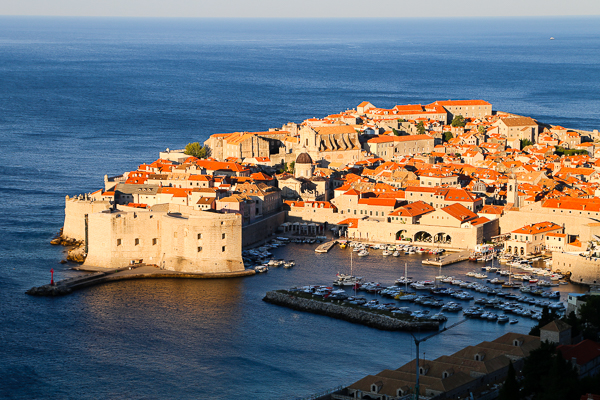
I had no idea of the effort it would take to snap this one postcard panorama of sunrise over the medieval city of Dubrovnik.

What was intended to be a 10 minute walk beyond the city walls turned into a 45 minute early morning hike to the hilly residential districts above town, just to find one unobstructed spot without trespassing into someone's private property.

For fellow travelers looking for the exact location of this photo, here is the Google Maps location and GPS Coordinate (N 42 °38'35.505 E 18 °7'7.188). You should find a gravel road that climbs above a small cliff to provide a clear view.
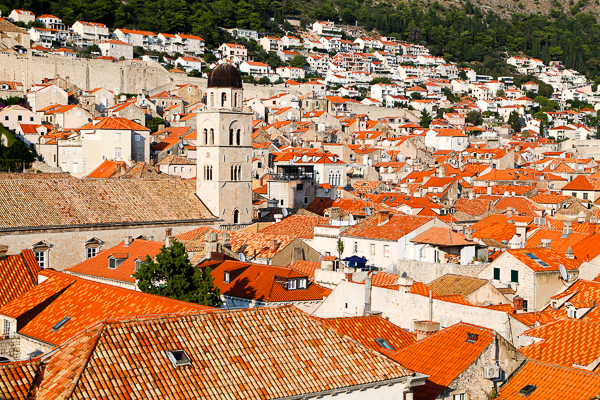

The sacrifices made that morning typified my experience of uncovering my favorite photo spots of Dubrovnik, long purported to be a photographer's mecca for its sea of checkered red rooftiles surrounded on all sides by medieval ramparts and mighty bastions. While nobody can refute its photogenic qualities, getting clear shots without its mind-blowing hordes of tourists was a whole different matter.
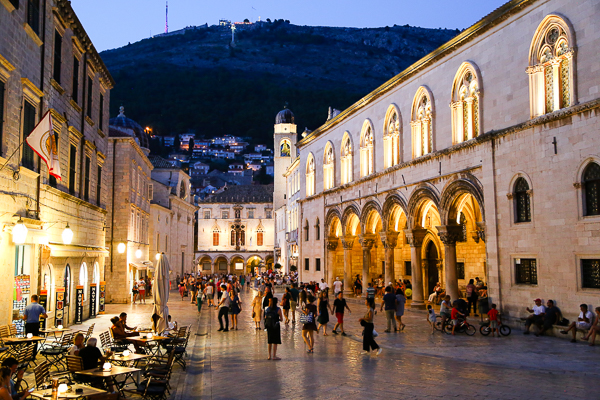

On a cruise ship day it may appear that the whole world has come to Dubrovnik, and for good reasons. Coined Pearl of the Adriatic by Lord Byron, declared a World Heritage Site by UNESCO and popularized by Game of Thrones and Star Wars as a filming locale, Dubrovnik has become the most popular tourist destination in the Balkans by a long shot, 20 years or so after that infamous siege during the Yugoslav Wars.

So we purposely avoided the peak of the tourist season, opting for two nights in mid September when the weather was still warm and the crowds were hopefully receding. That morning we took the highway bus in from neighbouring Montenegro, booking a car for an excursion to Ston the next day and picking up tickets for the third morning towards our next stop of Mostar.

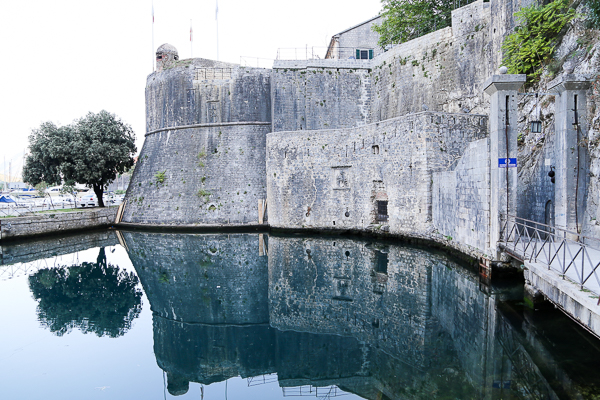
But nothing prepared us for the shock of a Disneyland-like entrance check through Dubrovnik's majestic 16th century gate, as we shuffled behind hundreds of queuing tourists aiming to maximize their five hour mad dash through the sights before returning to their cruise ships for the night.

And the cruise ship terminal wasn't even full on this day.
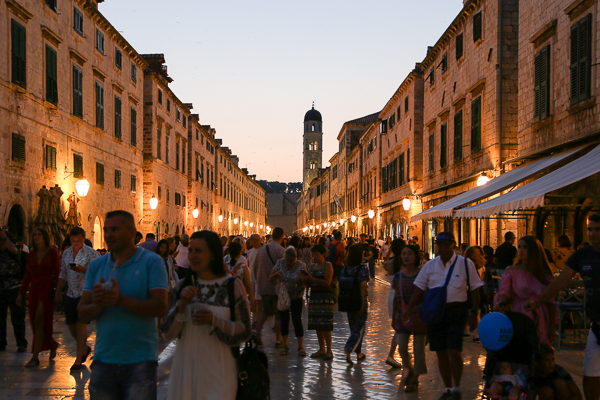

This extreme crowding has been well-documented by the likes of The Daily Telegraph which sounded an alarm back in 2017 with its article "The Death of Dubrovnik." UNESCO has also raised concerns about the old town's sustainability as a World Heritage Site, and its dwindling population of 1,000 locals versus 1,000,000 plus visitors a year. That ratio is already more than two times worse than Venice and growing every year.
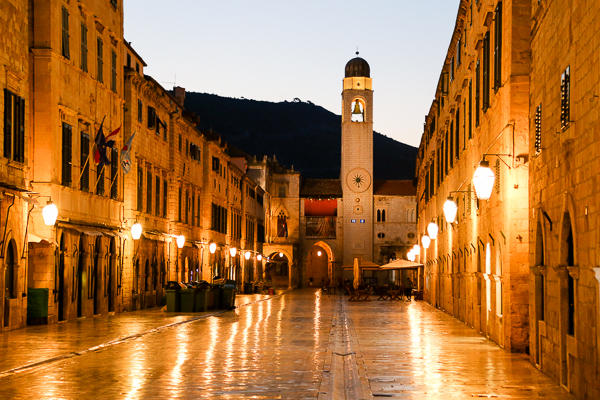

Now compare THIS with the previous photo of the multi-national hordes.

So yes, it is possible to enjoy Dubrovnik in its serene, unhurried authenticity that was the norm just a generation ago, before the onslaught of mass tourism in the form of Adriatic cruises. There are just two easy steps.
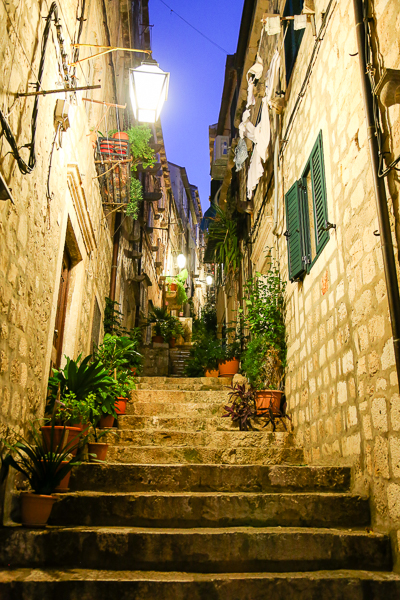

First you should stay for the night inside the old town. And second, you must wake up real early. I would suggest five in the morning if your body can handle it.

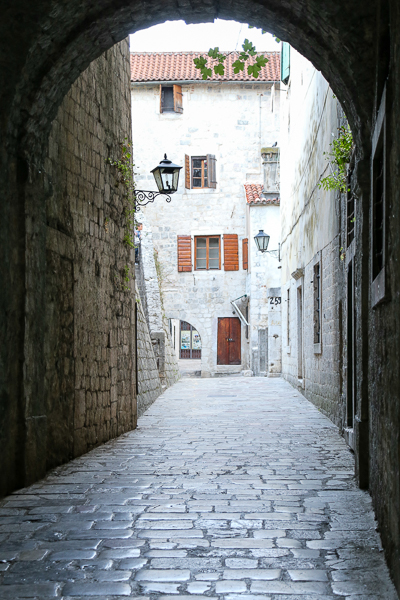
Do this, and it will open up a magical maze of noiseless, dimly lit alleys essentially untouched since the time of the medieval Republic of Ragusa.
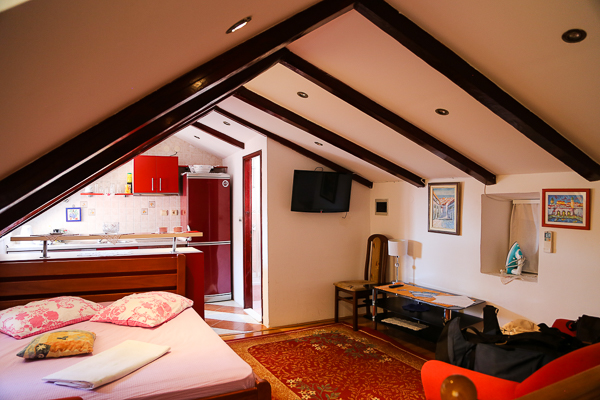

Accommodations within the old town aren't cheap of course. In fact this was the second most expensive apartment of our journey through six Balkan countries despite the Spartan decor of this bachelor suite, double bed on one side of the kitchen counter and the sink on the opposite side. Thankfully the modern convenience of air conditioning and wifi -- and a washing machine! -- were available.
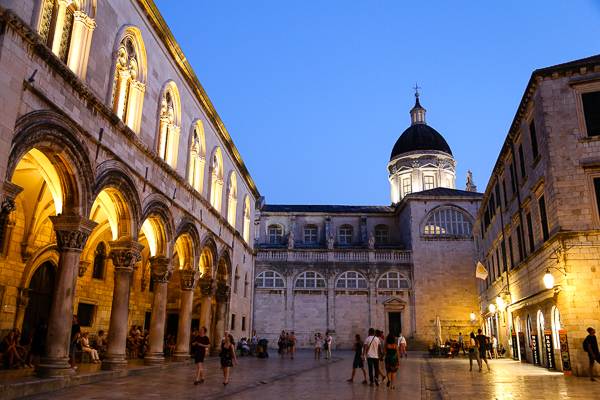

Evening strolls to the Rector's Palace became an after-dinner routine with our apartment situated just 250m away in a steep alley above Prijeko ulica. It was a minute's walk to the supermarket and a Mlinar Bakery, and five minutes to the bus stop outside the Pile Gate.
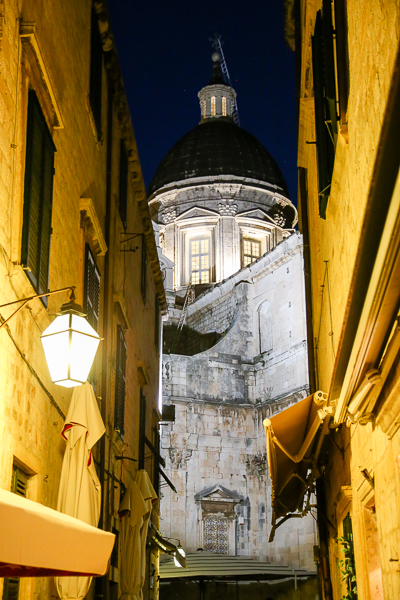

Just south of Rector's Palace is the dome of Dubrovnik's baroque cathedral, focal point of a renowned 1000-year-old parade acclaimed as UNESCO Intangible Cultural Heritage. The evening atmosphere was calmer than daytime, though it was nowhere as mesmerizing as the early morning.
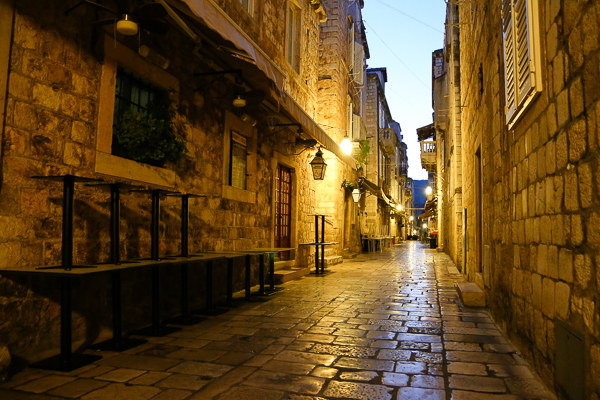

This was the reward for waking up at 05:30 in the morning at the famous Prijeko ulica, epicentre of Dubrovnik's gastronomic scene swarming with herds of thirsty tourists every lunch and dinner hour. I had the luxury of several minutes -- rather than seconds during daytime -- to frame my favorite shot without any obstruction.
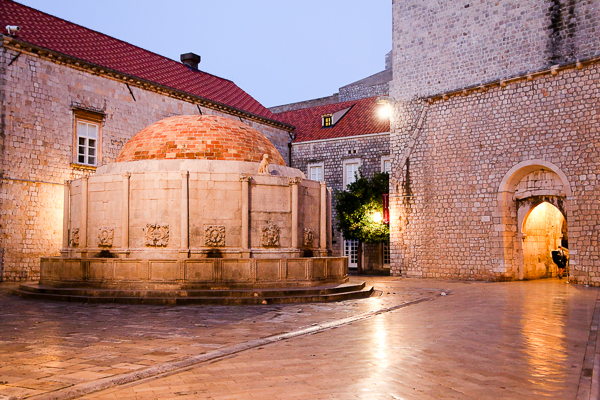

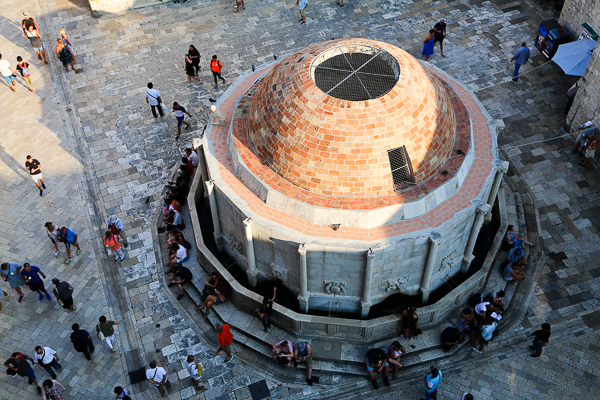
For once nobody stopped to admire the 16-faced fountain of Onofrio, Dubrovnik's 500-year-old landmark originally designed as the culmination of medieval aqueducts transporting water to the walled citadel from a dozen kilometres away.
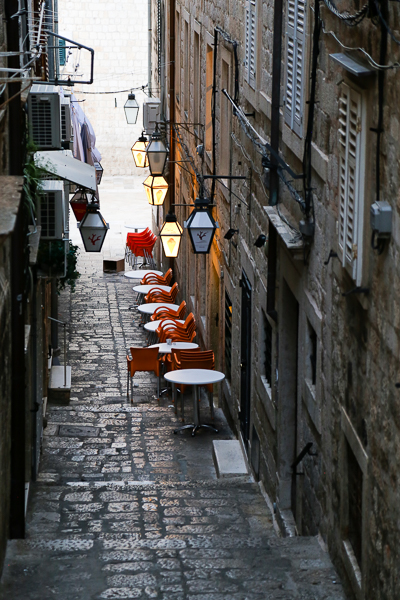

Nothing was open at this hour aside from the 24 hour Mlinar Bakery on Stradun. Within the next 30 minutes the waiters would finish setting up the tables, and by 07:00 the alley would be filled with patrons arriving for their morning shots of crna kava.
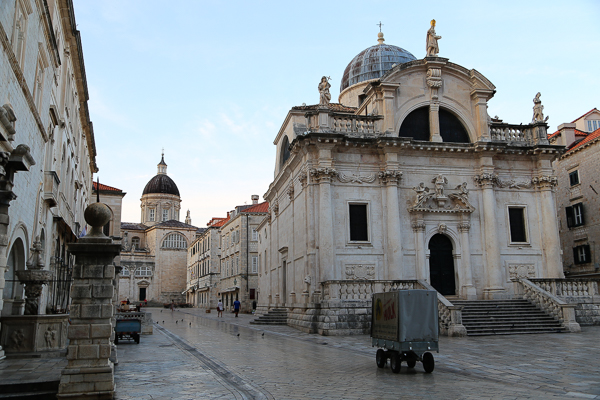

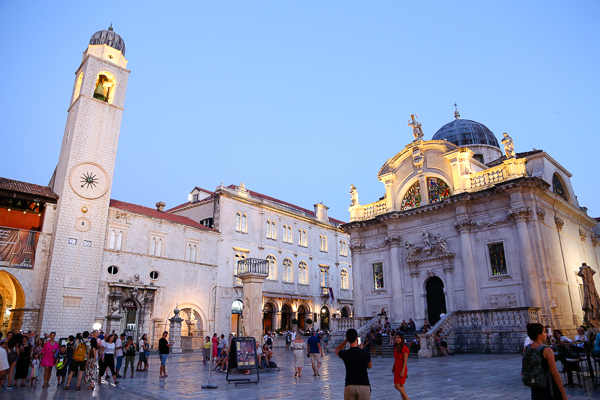
Garbage collection and engineering trucks started showing up at 06:00 in front of St. Blaise, an 18th century reincarnation of a medieval church dedicated to the city's patron saint.


Caravans of delivery trucks arrived with fresh supplies of fish and bread for the high end restaurants on the main thoroughfare of Stradun. The city has now officially awaken, in preparation to be flooded with tourists again within the next two hours.


Long considered the beating heart of the old town, Gundulic Square has for centuries hosted the farmer's market for its bewildering assortment of local produce from fresh squash blossoms to aged Croatian grappa, all under the watchful eyes of the city's favorite poet.
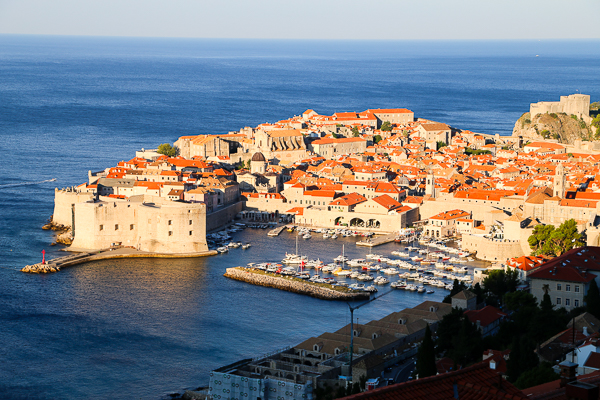

At 07:30 the sun had just climbed over Mount Srd to paint the old town with a glorious golden hue. It took at least 40 minutes to find my desired panorama as mentioned above, starting out from the Ploce Gate, poking my nose past the cable car station and further up the steep alleys towards the highway at the top.
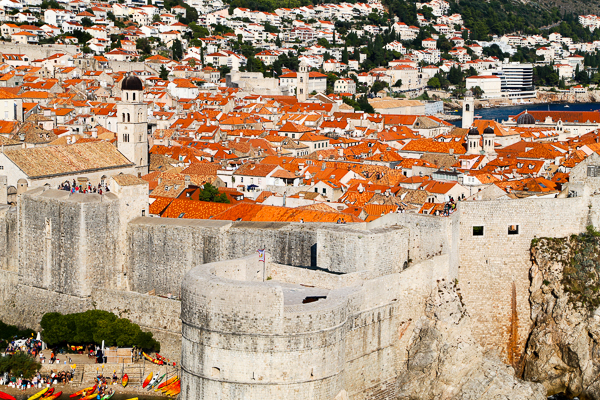

To truly appreciate the massive scale of the medieval fortifications one must spend time to hike these ramparts, 17 towers in all that defended its citizens not only against 16th century Turks, but as recently as the 1990s during the Siege of Dubrovnik by Yugoslav artillery.
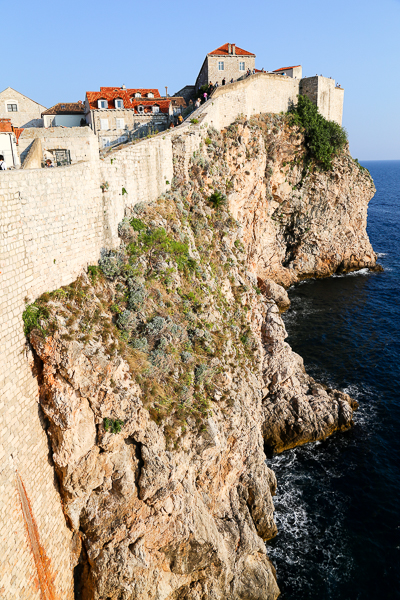

Most visitors would agree that 90 minutes would be minimal for the breathtaking views of majestic crenellations and sea cliffs afforded by two kilometers of adjoined walls, especially in tourist season when the narrow medieval walls become clogged by masses of day-trippers from the cruise ship terminal.
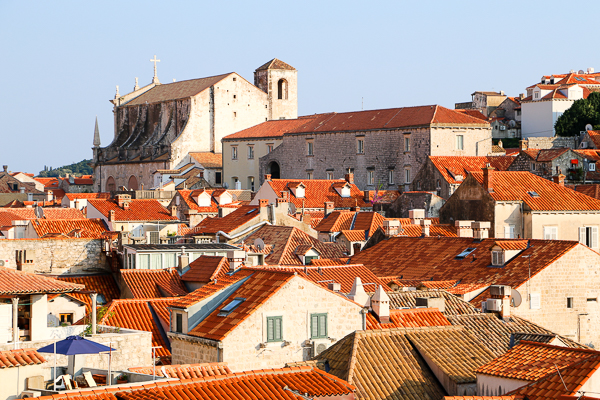

We waited until the late afternoon before beginning our obligatory circumnavigation of the city walls, above the medieval skyline of St. Ignatius and the adjoining Jesuit college on one side and a deadly drop to the blue Adriatic on the other.
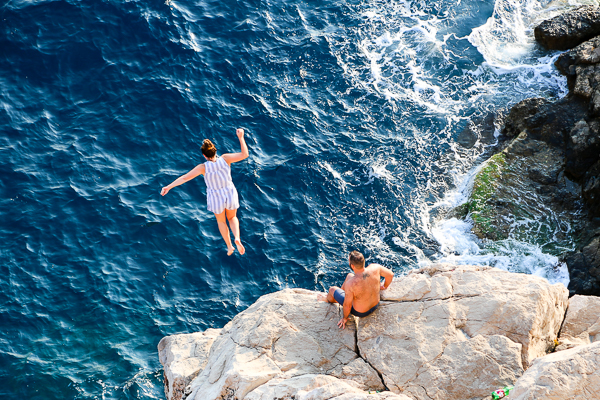

Apparently not everyone was averse to leaping into the crashing waves below. Makeshift bars dot the rocky shoreline beneath the walls, serving a youthful clientele inclined to enliven their pub crawl with a few cold swims in the Adriatic.


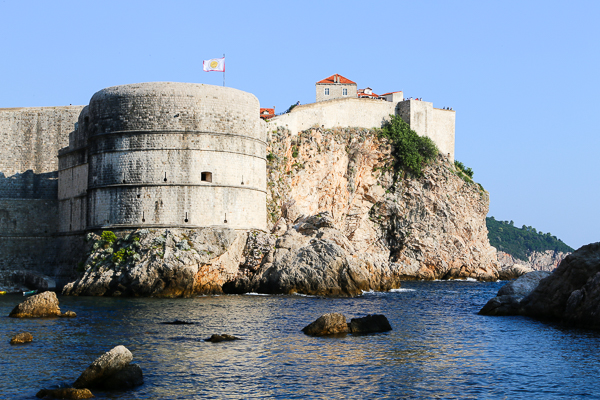
Arguably the best vista of Dubrovnik's impenetrable walls comes from the neighbouring castle of Lovrijenac, just 200m outside the Pile Gate atop a rocky promontory, next to the launch point for local kayaking tours. The combined entrance for the City Walls and Lovrijenac was about the only reasonable price tag in town, as we would soon be unpleasantly surprised for dinner.

As usual our criteria for meals are quite simple: give us authentic local dishes at a budget that locals can afford. Unfortunately at Dubrovnik the locals are quickly becoming extinct as discussed above, making our goals somewhat unrealistic.
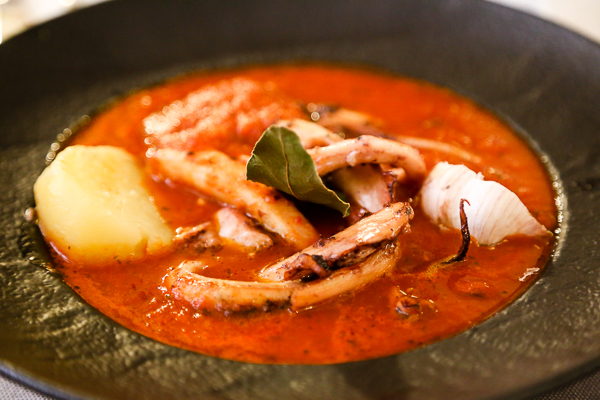

At Lucin Kantun (see map) we came to sample what was rumoured to be one of the better deals among Dubrovnik's abundance of premium priced restaurants. A dish of oven baked octopus in tomato paste sounded very reasonable at 110 kuna or 15 euros, until it turned out to be a tapa sized dish of four small pieces of tentacles.
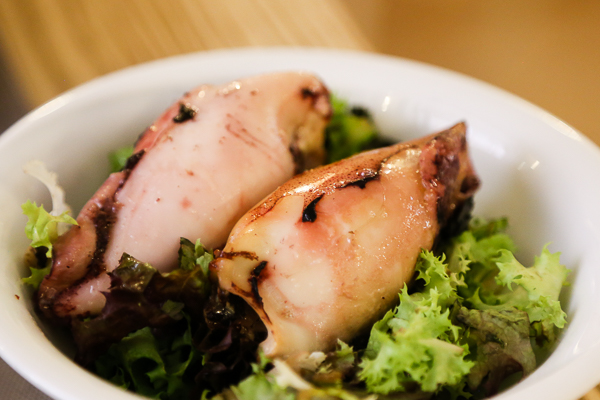

This appetizer of stuffed squids was almost a better value at just 45 kuna (6 euros) for a slightly smaller portion. Like the baked octopus above the taste was pleasant but bordering on being unmemorable.
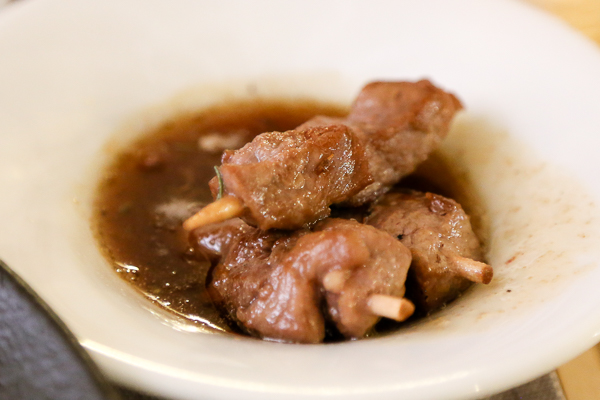

Nothing summed up our first meal in town like the bite-sized Lamb Brochettes with Lavender Honey, well-flavoured but astoundingly miniscule in portion for its price. Fortunately the lavender honey turned out excellent as a spread for the bread, as I was barely half full without it.

Meal for Two Persons
Lamb Brochettes with Lavender Honey45 Kuna
Stuffed Squids45 Kuna
Baked Octopus in Tomato Sauce110 Kuna
Glass of Table White25 Kuna
Bottle of Water26 Kuna
TOTAL251 Kuna (CAD$51.2)


Craving for heartier portions at dinner time we visited the midmarket fast food joint of Barba (see map), famous among tourists for turning the traditional street grub of fried anchovies and burgers into seafood platters, still relatively affordable compared with neighbouring restaurants. Featuring a full octopus burger on a squid ink bun, octopus salad, calamari, anchovies and battered shrimp, it was more food than we could finish for a price (299 kuna or 41 euros) steeper than any burger platter I have ordered anywhere in the world.

Meal for Two Persons
Platter for Two299 Kuna
Bottle of Karlovacko x 272 Kuna
TOTAL371 Kuna (CAD$75.7)


So we learned our lesson and ordered cheap Cevapi sandwiches for take-out the next day, and better yet, got out of Dubrovnik and explored its spectacular countryside with a rental car. At the nearby towns of Ston and Mali Ston we enjoyed an extraordinary hike along with one of our most memorable seafood meals, to be reviewed in the next post.

IF YOU GO

Dubrovnik's airport is conveniently served by low-cost carriers such as EasyJet and Jet2. For travelers planning a wider Balkan road trip like we did, highway buses from Kotor (3.5 hours), Mostar (4 hours), Split (4.5 hours) etc. arrive at the long distance bus station near the cruise terminal, a quick 15 minute ride on local buses to the Pile Gate bus stop just outside the old town.

Wednesday, December 12, 2018

Balkan Road Trip - 07. Kotor's Great Wall


This post is a record of our 3 hour hike along the medieval ramparts of Kotor, arguably the most popular hike in the entire Balkans by virtue of Kotor's popularity with tourists arriving on Adriatic cruise packages. If you're visiting Kotor and have questions about fitness requirements, view points and time required for the full hike, read on.


This was just the 7th of our 22 day Balkan Road Trip, and it occurred to my wife that every medieval town that we had visited so far -- Gjirokaster and Berat in Albania and now Kotor -- featured a hill top citadel accessible only via a thigh-burning workout. Gjirokaster was a short 20 minute climb, Berat took twice as long, and Kotor would take us a generous 90 minutes with at least 30 minutes of photo stops before reaching the top.
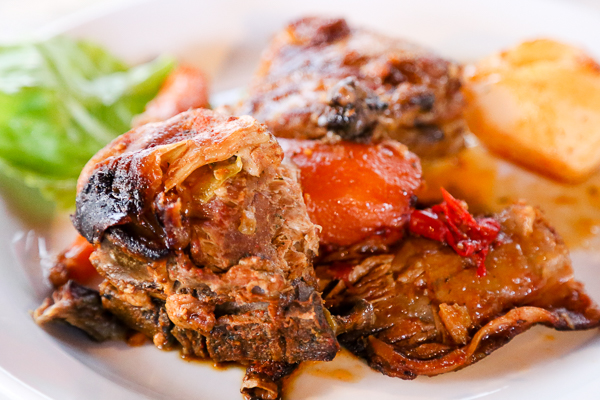

This is a hike of easy to moderate difficulty with a modest climb, only 280 metres in elevation gain and attempted, at least in part, by just about every visitor in average fitness. You don't even need to climb all the way to St. John's Fort if all you want is a panoramic photo of Kotor -- a 20 minute hike to the lower levels of the trail would do.


08:30. First we had to fuel our hike with a hearty breakfast of supermarket pastries, rich Balkan yogurt and the Montenegrin charcuterie specialties of prsut and budjola, the delicious local specialty of smoked pork neck cured and air-dried in the harsh winter gusts of the Adriatic Coast.


09:55. Two trail heads start out from the old town, a main one starting under an arch behind the 800-year-old church of Svete Marije Koleđata in the northern part of town, and one closer to our apartment beginning from the little square of Pjaca Skaljarska.


10:00. Either trail head would lead to the ticket office just above the roof level with clear views of the twin bell towers of Sv. Tripuna, one of the only two Roman Catholic cathedrals in Orthodox-dominant Montenegro.


10:10. Whether Kotor belongs to the historical region of Dalmatia remains a politically sensitive discussion, but we did spot the first Dalmatian dog of our trip blocking the hiking trail, napping in the shadows of the steep mountain where sunlight won't likely reach until closer to noon.


10:20. 50 metres above the town we had our first unobstructed view of the world famous Bay of Kotor, often mistakenly referenced as the southernmost fjord in Europe. This deep inlet was not carved out by glaciers in Norwegian fashion, but formed when advancing sea levels partially submerged a prehistoric river gorge.


10:30. Everyone stopped for the view as well as a drink of water at Our Lady of Remedy, a tiny 16th century chapel with the seating capacity of about 10. For casual tourists this would make a convenient turnback, and for hikers a chance to purchase refreshments from the hawkers before the steeper sections above.


10:40. After a short rest we continued up the grueling switchbacks alongside hundreds of multi-national tourists marching off the cruise ship, attempting the hike in every form of inappropriate footwear from leather high heels to slack sandals.


45 minutes of hiking above town and we're still seeing stray cats being well-fed by the locals, as they have been for centuries for managing Kotor's population of mice thriving underneath the crevices of the medieval cobblestones.


10:53. Through the crenellations of a crumbling bastion one can catch a bird's eye view of the triangular shaped fortress of Kotor, its medieval houses now dwarfed by the massive cruise ship parked just a stone's throw away.


11:00. Halfway between Our Lady of Remedy and the Fortress of St. John, we scaled some frighteningly steep stairs at a dilapidated fort before coming across a sign declaring them to be off-limits. You don't need to climb such stairs to complete the hike, but you do need the minimum fitness level to sustain a 60 to 90 minute stair climb with frequent rests.


11:10. Temperature was quickly rising above 30 degrees as the trail started to emerge from the morning shade. To break the monotony of exhausting switchbacks, the city has strategically placed a number of curators in medieval garb along the route, sharing the stories of these walls from the narratives of blacksmiths, stonemasons and nobility.


Ever since the arrival of their ancestors on medieval galleons, these cats have apparently taken over from the Winged Lion of Venice as the talismanic symbol of Kotor, proudly featured in cheap souvenirs, a dedicated feline museum as well as an unofficial cat square.


11:20. Our proud moment of reaching St. John's Fortress came with the reward of possibly the best panorama of the Bay of Kotor, its steep dark mountains plunging down to the sea in a classic Montenegrin landscape.


Fortified by ancient Illyrians in the same era as classical Sparta or Athens, this mountaintop citadel predates Venetian Kotor by nearly two thousand years and now bears the honour of two UNESCO World Heritage Sites, one for the cultural landscape of Kotor and one for its role in the 1000-kilometre-long fortification for the old Republic of Venice.


11:24. A Montenegrin flag now proudly flies above the 2500-year-old stronghold, realistically a 60 minute hike from the townsquare though it took us 90 with frequent photo and rest stops in the 30 degree heat.


The view behind the castle led towards the tiny hamlet of Spiljari comprised of two surviving houses and the crumbling chapel of St. George, along an ancient donkey path that zigzagged through the craggy mountain passes towards Lovcen National Park.


We began our steady descent after 40 minutes at the fortress, taking the exact same route in half the time and reaching the townsquare at 12:45. In retrospect the entire hike could be accomplished within 2 hours, though one would need the discipline in limiting the photo stops.


We rewarded ourselves with a hearty take-out lunch from the cheap and excellent Tanjga (see map) with appetizers and drinks from the neighbouring supermarket. A filling cevapi sandwich for 4 euros and roasted veggies for 3.6, delightful slices of smoked Montenegrin beef prosciutto to be washed down with a couple cans of Nikšićko lager. It was a cheap 12 euros for two that afforded us the extra budget to splurge at the classy Galion at dinnertime.


Delectable roasted peppers, majestic Venetian ramparts and the twin islands of Perast were some of the memories that I brought back from Montenegro in appreciation for a coworker who happens to hail from Herceg Novi. Unfortunately we had only two nights in Kotor with no time remaining for Durmitor National Park and the interior, but it was an intro to a fascinating and underrated nation recommendable to fellow travelers considering a visit to the neighbouring (and extremely popular) Croatia.

Sunday, December 2, 2018

Balkan Road Trip - 06. Kotor, Montenegro


We saw exactly why Montenegro is called Montenegro the moment our bus crossed the Albanian border into this small nation of brooding dark mountains, rugged, barren and frighteningly steep.


The modern name betrays a Venetian past when seafarers coined this land of tall impassible peaks between the lush greenery of Dalmatia and the arid rolling hills of Albania. The Slavic-speaking locals also embraced the name as Crna Gora, or Black Mountain, even though their land also encompassed arguably the most breathtaking stretch of the Adriatic coastline.


This was our homebase in Montenegro, part of our 22-day itinerary along the Balkan coast from Albania to Slovenia. Here we stopped for two days at the fjord-like Gulf of Kotor, home to the second most spectacular port city in the Adriatic in my opinion, with Venice being the lone exception.


Some readers may disagree in favor of world-famous Dubrovnik, by far the most popular tourist destination in the Western Balkans and a fellow UNESCO World Heritage Site, situated 60 km to the west. But while Dubrovnik flaunts her majestic ramparts on the sea cliffs, Kotor strings hers several kilometres up the soaring peaks guarding her back. To me Kotor is nestled in a more dramatic natural setting, costs less for food and lodging, and is less overrun with tourists -- for now.


We arrived after a grueling 7 hour bus ride from Tirana and found our rental apartment just 100m inside Kotor's southern gate. After a late lunch of cheap Cevapi we were on the move again, this time hopping on a local bus to Perast for a short sail in the sunset.


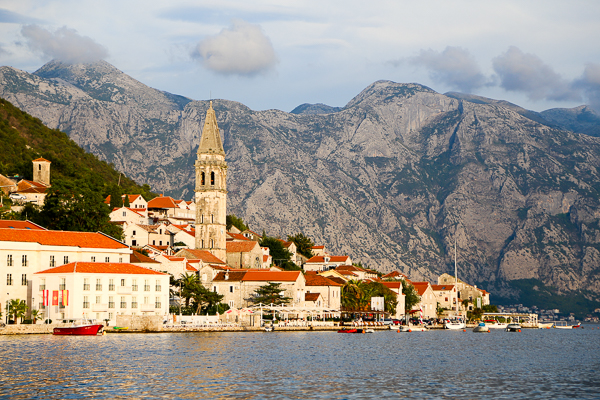
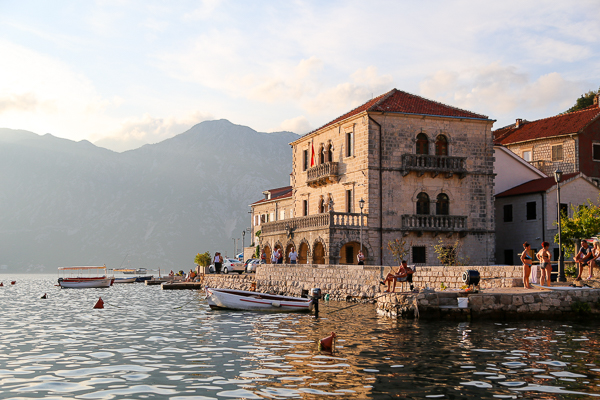
A dozen kilometres north along a winding coastline, tiny Perast enjoys worldwide fame disproportionate to its 350 residents for its iconic twin islands floating in the bay's sheltered waters, just a few hundred metres off a riviera ornamented with Baroque palaces and a quiet marina.


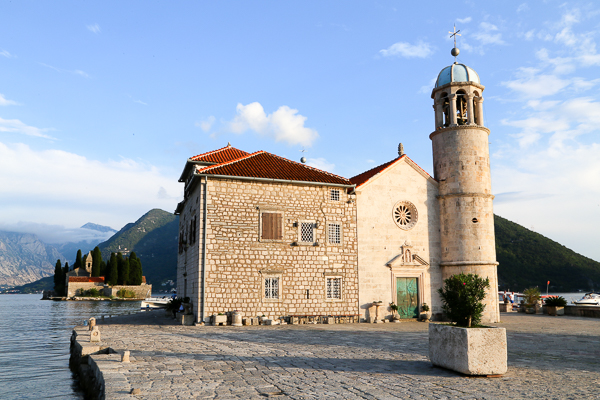
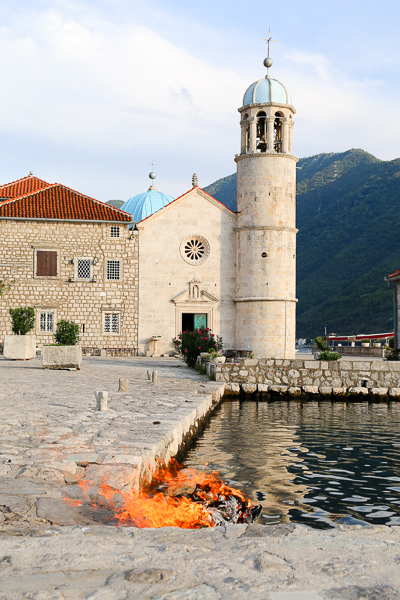
Several boats shuttle visitors from Perast to the farther island known as Lady of the Rocks, artificially created over the centuries by local sailers who vowed to deposit a rock at the island upon safe return from each voyage.


That medieval rite still comes alive every year on July 22 when local fishermen set sail at sunset to shore up the island by hauling rocks into the sea. In case anyone is wondering how these two flat islands manage to stay above water during high tide, the difference between high and low tide is apparently a few centimetres in the Bay of Kotor.


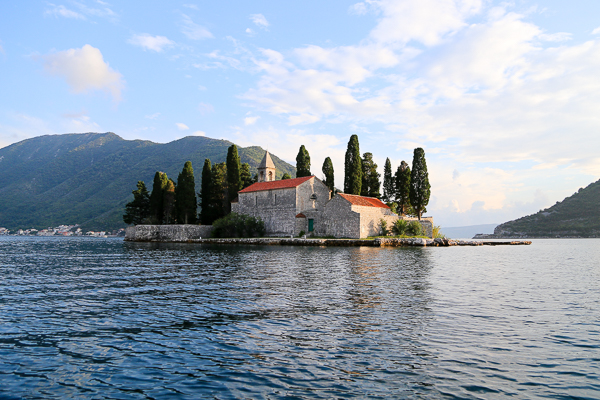
In stark contrast with the Baroque elegance of the Lady of the Rock, the neighbouring island of St. George features an austere, masculine abbey that once served as Perast's first line of defense agasint Ottoman threats. Historic graveyards of local citizens still surround the 12th century Benedictine monastery, giving rise to the moniker the Island of the Dead.


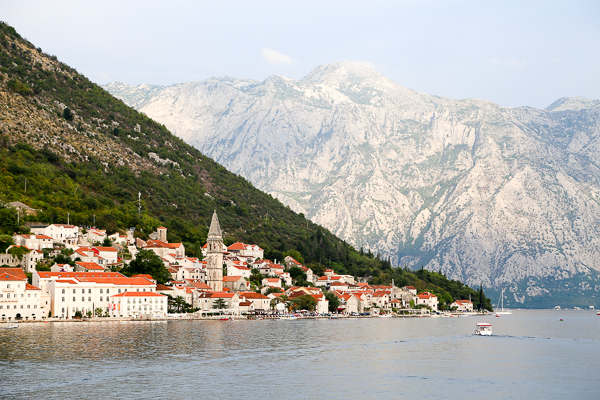
This 5 euros boat ride offers the best panorama of Perast as a 17th century waterfront town, dominated by the clock tower of St. Nicholas and shimmering under the setting sun with Montenegro's vertical, barren mountains as the backdrop.


Back on dry land we hiked up the steep stairs of sleepy Perast, still boasting its collection of Venetian watchtowers from a tense era when the town served as Kotor's outpost against Turkish-held Herceg Novi to the west.


Perast's twin islets -- one artificial and one natural -- glittered in the sunset while boats collected the last remaining passengers back to shore. It was time for dinner, and we decided to try out a local restaurant before heading back to Kotor.

Restaurant Review: KONOBA SKOLJI (Perast) (Location Map)

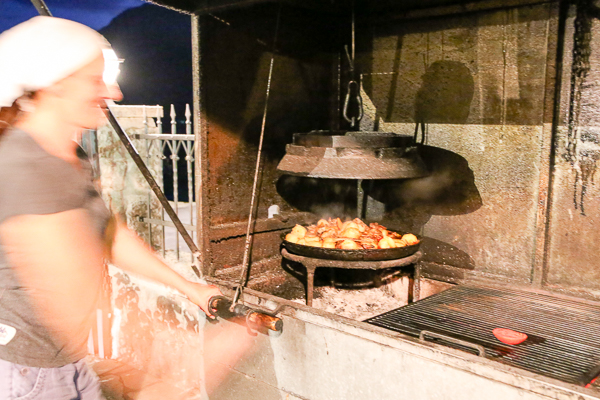
We picked this restaurant for one quintessential Dalmatian dish, the ancient culinary art of the Peka in which meat and root vegetables are seared and slow-roasted at once under a heavy cast iron lid, until all ingredients start to melt towards a delicious finish.


But first we must acclimatize to Kotor prices after several days in ultra-affordable Albania. 6 euros for this local fish soup of Riblja Corba might have been reasonable for tourist-oriented Perast or Kotor, but was at least twice the price compared with Tirana where we enjoyed possibly our best meal of the year the previous day.


My wife ordered this generous dish of grilled prawns, served with the Dalmatian classic of Swiss chard and potatoes that we would encounter a dozen times over the next two weeks. The prawns might have been Mediterranean or even Adriatic in origin judging by their depth of flavour.


Virtually every table ordered the same signature dish of Lamb and Potatoes under the Peka, patiently roasted in its own juices to achieve that legendary melt-in-the-mouth texture. It was a hearty meal that neither of us could entirely finish before catching the next hourly bus back to Kotor for the night.

Meal for Two Persons
Riblja Corba6 Euros
Grilled Prawns20 Euros
Lamb Peka14 Euros
Bottled Beer x 26 Euros
Large Water3 Euros
TOTAL49 Euros (CAD$73.5)


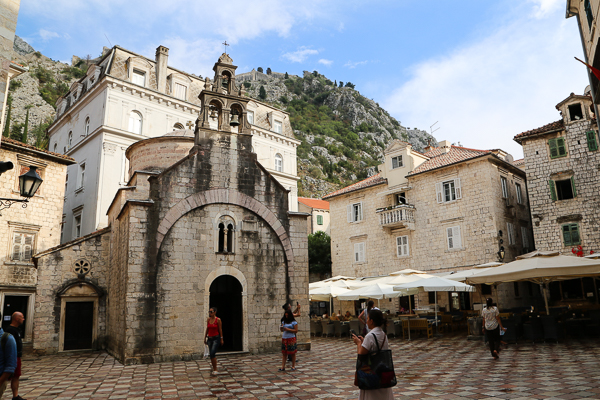
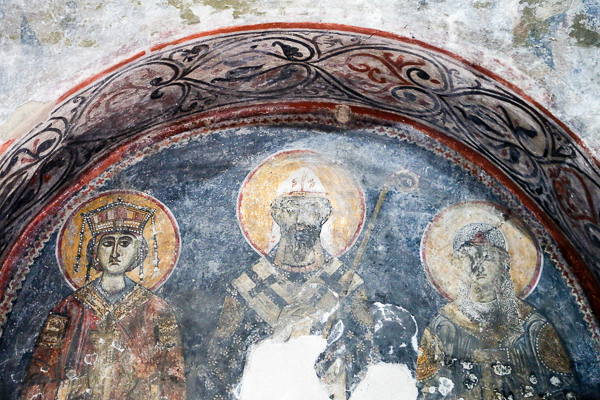
Back in town the one unmissible attraction is Kotor's mini-Great Wall featuring kilometres of knee-busting stairs, a two-to-three-hour hike with world class panoramas to be reviewed in the next post. The medieval walled city itself also boasts a number of impressive monuments including the pictured 12th century Romanesque church of St. Luke's.


Having endured countless earthquakes including one of 6.9 magnitude in 1979, the chapel's priceless 800-year-old frescoes and two altars -- one Orthodox and one Roman Catholic -- still serve as a symbol of unity and religious tolerance in Orthodox-dominant Montenegro.

On this day we had a cheap takeout lunch (see next post) for the hike, which left us with a generous budget for dinner at what is rumoured to be Montenegro's finest restaurant.

Restaurant Review: GALION (Kotor) (Location Map)

We normally don't splurge on so-called fine dining establishments on our travels. First we don't have the budget, but more importantly we have learned over the years that the most expensive restaurants, in efforts to differentiate and justify their higher prices, tend to drift away from the most authentic, time-honoured recipes of their region.

But at Kotor the price disparity between middle-of-the-road and the finest restaurants is curiously nonexistent, as revealed by the 6 euros Riblja Corba at Konoba Skolji last night. The same dish cost 5.9 euros here at Galion, served by a crew of impeccably dressed waiters at a classy dining terrace on stilts above the crashing waves, with romantic sunset views of the Bay of Kotor.


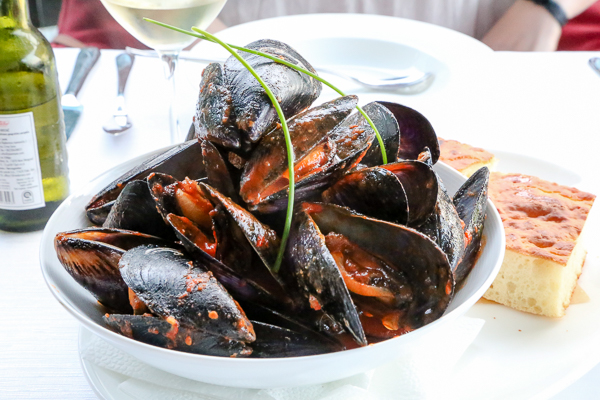
As expected the food trended towards modern Pan-Mediterranean rather than traditional, unfaultable to the point of unremarkable as typified by our pot of Mussels Buzaru which almost passed for Provencal with its liberal usage of tomatoes, white wine and thyme.


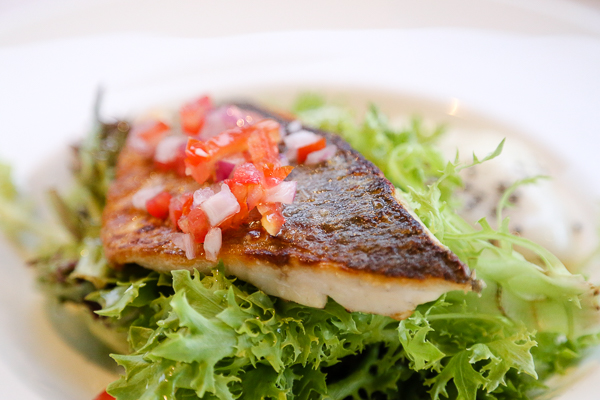
My wife had the intuition to order this green salad topped with an expertly pan-fried sea bass fillet, absolutely fresh with a deliciously crispy skin. Again this might not be traditional Montenegrin fare, but it was so perfectly executed that it was by far the best dish of the evening.


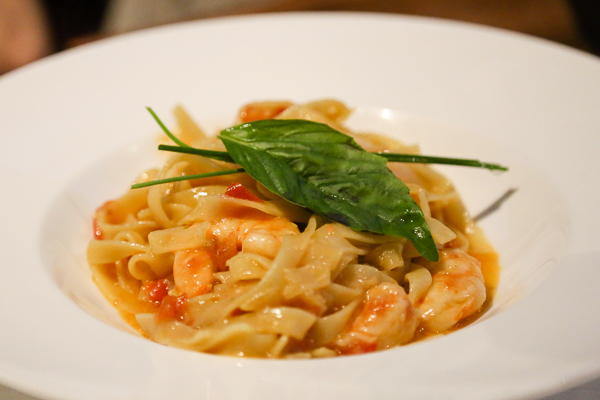
With the phenomenal Linguine con Gamberetti at Tirana's Markata e Peshkut still fresh in memory, my wife took a chance on the local interpretation of Spageti sa Gamborima that turned out mildly anticlimactic. The pasta was actually decent and the shrimps fresh, but the expectation was simply too high when the gold standard was an unparalleled dish in Tirana that cost a third of the price here.


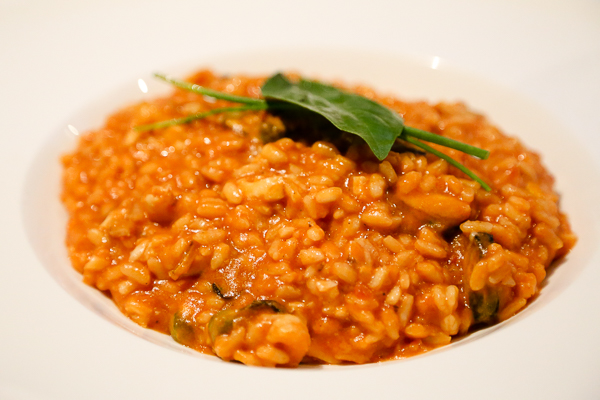
With a creamy seafood risotto we wrapped up this dinner of two large appetizers and one soup to share, pasta and rice for mains and a couple glasses of local Krstac, with water level panoramas of the Bay of Kotor and a guitarist performing Elvis and Sting classics in the background. I didn't realize at the time, but our final bill of 33 euros per person would be a steal compared with the exorbitant prices at our next stop of Dubrovnik.

Meal for Two Persons
Musulje na buzari10.9 Euros
Brancin salata11.9 Euros
Riblja corba5.6 Euros
Spageti sa gamborima13.9 Euros
Rizoto sa plodovima mora13.8 Euros
Glass of Krstac x 210 Euros
TOTAL66.1 Euros (CAD$99.2)


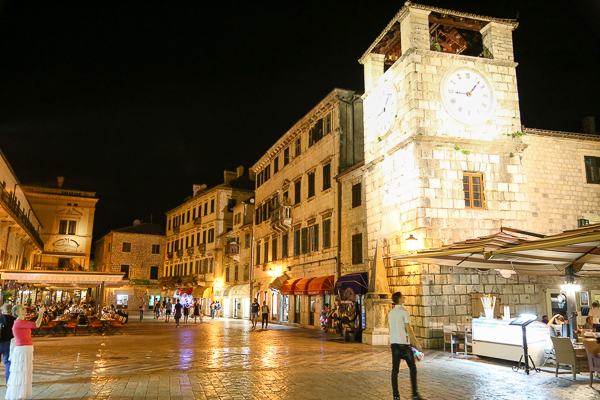
Our after dinner stroll took us through the medieval alleys of Kotor to the Pima Palace, a 17th century Renaissance mansion presiding over a little square to the side of the cathedral. The hordes of day-trippers would not return until the morning, affording a few hours of peace and authenticity for the former Venetian citadel of Cattaro.


Even the main square appeared uncrowded for once after the multi-national flocks of tourists sailed off on their Mediterranean cruises, predictably en route to Dubrovnik or perhaps Bari. It was this charming atmosphere on evenings and early mornings that made our two night stay in the medieval town worthwhile.


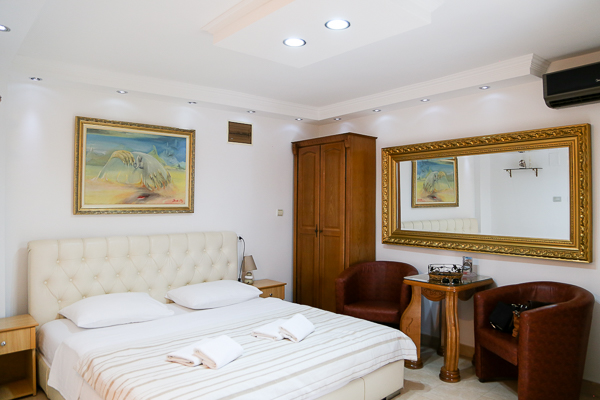
Thankfully our rental apartment -- realistically a glorified bedroom suite with a tiny kitchen counter -- was just a five minute walk from the bus station where our early morning bus to Dubrovnik would depart. We left Kotor with wonderful memories especially of the amazing hike, as tiring as it was, that will be the dedicated subject of the next post.

IF YOU GO

Kotor is easily accessible via the nearby airport of Tivat which is served by EasyJet and a number of cheaper airlines. Those on a cross-country backpacking trip like ourselves can connnect with long distance buses to Dubrovnik (3.5 hours), Tirana (7 hours), Podgorica (2 hours) or even Mostar (5 hours via privately run minibuses).