Friday, November 2, 2018

Balkan Road Trip - 03. Gjirokaster, Albania


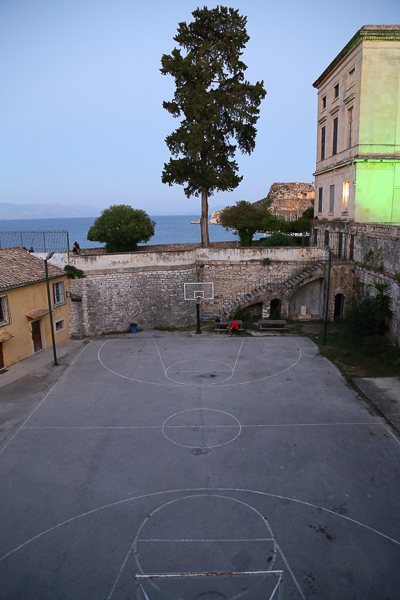
Here I stood at one of Europe's most photogenic street corners, a stunning medieval quarter that would be a major tourist draw in just about any country. Place this in Germany and it would rival any romantic old town along the Middle Rhine, or Italy to complement the magical Alberobello.


Except this is Albania, one of the most underrated European destinations for various negative reasons -- most of them unfounded as we have since learned. 10 out of 10 friends of ours expressed safety concerns -- and various degrees of envy -- upon hearing of our itinerary. But how safe is Albania?


Since I personally didn't know anyone who had visited Albania, we turned to Government of Canada's travel advisory page which provided the following warnings as of 2018:

Economic hardship and easy availability of firearms increase the risk of violent incidents ...

Demonstrations occur in many Albanian centres, often with little or no advance warning, and have the potential to suddenly turn violent ...

Avoid non-essential travel to the city of Lazarat, where Albanian state police and armed marijuana growers have in the past engaged in violent altercations ...

And Lazarat is a 10 minute drive from Gjirokaster, which put us at the outskirt of Albania's gangland. Fantastic.


So we played it safe and easy with our own private taxi to old Gjirokaster, 40 km from the ancient Roman ruins of Butrint as the bird flies though it felt twice as long on the narrow mountainous roads of the Southern Balkans. Our young driver Mario became the first Albanian we came to know, and his gentle manners and openness to discuss politics and local life gave us the most welcoming first impression of his homeland.


The second Albanian we came to know was Tina, mother of two and gracious owner of our rental apartment who, in limited English, offered most helpful advices such as negotiation tips with local taxi drivers. Our apartment for four, located less than 100m from the aforementioned street corner, cost a fraction of what we would pay in Montenegro and Croatia later on our trip.


Stepping outside Tina's apartment immediately landed us at the heart of Gjirokaster's open-air bazaar, curiously steep and slippery with its paving of patterned cobblestones polished over centuries by the feet and hoofs of Ottoman caravans.


Through its 1700-year-old history Gjirokaster has earned two nicknames: City of Thousand Steps for the steepness of its streets, and City of Stone for its whitewashed masonry walls and grey slate roofs, all designed for defense and fire resistance in case of war.


A magnificent example of a fortified tower house, Zecate House is a 200-year-old Ottoman residence with a breathtaking reception room of immaculate fresco walls, ornate wooden ceiling and a still-functional fireplace. This is not an official museum with fixed opening hours -- just knock on the neighbour's door and pay a nominal fee for entry, and perhaps buy a cheap drink of raki from him for taking care of this priceless heritage asset.


It should hardly be suprising that the grandest and most defendable residence is located near the old town's highest point, offering from its balcony a sweeping panorama of Gjirokaster's merchant quarters with its brooding, expansive castle perched upon the hilltop.


Proudly on display inside the castle's labyrinths are various anti-aircraft guns and tanks captured from the retreating Italian and Nazi German forces during WWII, as well as prison cells that housed political dissidents during the communist era.


The most famous Cold War relic was an U.S. Air Force T-33 that landed at Tirana amid technical difficulties, and placed here as a trophy by dictator Enver Hoxha, Gjirokaster's most (in)famous son.


At the far end of the castle stands the handsome clock tower built by a 19th century warlord, now overshadowed in importance by the newer open-air theatre tapped as venue for the National Folklore Festival, the foremost showcase for traditional Albanian performing arts held once every five years or so.


The castle walls afford a bird's eye view of Gjirokaster's old and new quarters, stretching down the narrow plains of the Drino hemmed in by barren rusty hills typical of Southern Albania. It is a land that has always bred -- by deep-rooted discontent or perhaps just destiny -- revolutionists from Enver Hoxha to the riotists that helped bring down the government in 1997.


Unmistakable from above is the five-pointed intersection of the old bazaar with its uniformly grey roofs that has become the town's trademark. Next to the intersection is the only mosque in Gjirokaster that survived Hoxha's Cultural and Ideological Revolution when Albania was declared the world's first atheist state, back in the late 60s.


Souvenir shops at the bazaar opened late on this balmy evening in early September, hoping to squeeze the last Lek out of the short tourist season at a UNESCO World Heritage Site that has remained anonymous to 99% of international travelers. Also scrambling for tourism Leke were the restaurants, mostly serving rustic Albanian dishes extremely affordable by Western European standards.

Restaurant Review: ODAJA (Gjirokaster) (Location Map)

We visited two restaurants in Gjirokaster, averaging less than CAD$9 per head for multiple courses to share including drinks. Needless to say prices were the cheapest we've seen anywhere in Europe, comparable to rural China even.


Gjirokaster's famed contribution to Albanian cuisine, Qifqi is a vegan dish of rice and finely chopped mint, deep fried in its own customized frying pan that somewhat resembles a French escargot dish. Between the Qifqi, the earlier dish of stuffed peppers, an Albanian version of a creamy chicken-and-rice soup and a green salad, spending 900 leke (CAD$10.6) was enough to make the two of us mostly full.


But the best dish was the cheese.

This should be no surprise as Gjirokaster county is widely acclaimed for Albania's best cheese, its secrets honed for centuries by the region's sizeable Greek minority. Our slice of smooth white cheese was battered, deep-fried and drenched in local honey for a delectable side designed as appetizer, but saved and treasured as our dessert.

Meal for Two Persons
Village Salad200 Leke
Stuffed Peppers300 Leke
Rice Balls200 Leke
Chicken Soup200 Leke
Deep Fried Cheese with Honey200 Leke
Beer150 Leke
WaterFree
TOTAL1250 Leke (CAD$14.7)

After the cheap lunch we decided to splurge on some seafood for dinner. This was small town Albania of course, where splurging meant spending CAD$10 per head.

Restaurant Review: KUJTIMI (Gjirokaster) (Location Map)

At last we came across the baby mussels that we spotted in the morning, farmed at the pristine salt lagoon of Lake Butrint. In traditional Albanian fashion these mussels were shelled, lightly battered, deep fried and served with a dash of lemon that was quite optional for shellfish this fresh.


With frog legs sadly out of season we ordered the next most exotic dish on the menu. Our deep-fried freshwater eels turned out reasonably fresh, but did come with a slight muddy flavor that benefited from a generous squeeze of lemon.


To be honest none of the dishes stood out, and the only memorable dish on this first day in Albania was the excellent fried cheese at Odaja. Little did we know that we would soon encounter two of our favorite restaurants of this 22-day trip over the next two days, as we moved into Central Albania.

Meal for Two Persons
Fried Peppers200 Leke
Vegetable Soup200 Leke
Deep Fried Mussels400 Leke
Deep Fried Eels650 Leke
White Wine 0.5 L250 Leke
TOTAL1700 Leke (CAD$20.0)


The next morning we took Tina's advice and found a cheap taxi to Gjirokaster's makeshift bus station, really a gas station on the main thoroughfare. Here we boarded Albania's infamous mode of long distance transport, the legendary furgon, towards our next destination of Berat.

IF YOU GO

Gjirokaster is 4 hours from Tirana by bus, currently departing from the South Bus Station (see map) near the Eagle Roundabout. For those traveling north from Saranda, cheap furgons departing from Parku Miqesia take about 1.5 hours ... but the last one leaves around 13:00. If you're pressed for time like us and need a private taxi from Saranda, leave me a message below with your email address and I'll send you Mario's contacts.

Friday, October 26, 2018

Balkan Road Trip - 02. Butrint, Albania


Albania has never been the most popular destination even for independent travelers.

Call it communist or perhaps Cold War stigma from pre-1990s, but visitors remain relatively scarce and even fewer would travel the length of Albania from south to north. My Italian coworker knew only of its cheap beach resorts along the Adriatic coast, and nobody could advise us of what to expect as we walked up to the immigration counter at Saranda's port.


Part of the fun -- aside from Corfu's wildly disorganized port -- was to arrive at Saranda before the vessel even departed Corfu. That's right -- our hydrofoil departed Corfu at 09:40 and arrived at Saranda at 09:25, after adjusting to Albanian time which was one hour behind Greece.

And Saranda itself was not our destination. As evocative as the 5th century synagogue ruins at its city centre may be, everything pales in comparison to nearby Butrint, one of the best preserved Roman towns of its era and one of Albania's national treasures.


Most visitors based in Corfu would arrive at Saranda's port and do Butrint as a day-trip. Except we had to start traveling north after visiting Butrint and, most importantly, had no place to stash our heavy luggage at Saranda. We ended up pre-booking a taxi with our friendly driver Mario, traveling directly from Saranda port to Butrint then onward to the enchanting Ottoman town of Gjirokaster.


A UNESCO World Heritage Site in the same order as Olympia or Delphi south of the Greek border, the ruins of Butrint is a microcosm of Balkan history in its transformation from an ancient Greek colony to thriving Roman and subsequently Byzantine town to Venetian and Ottoman outpost, before being rediscovered as an archeological treasure in the modern era.


Even the most uninitiated visitor would be charmed by Butrint's natural setting, built on reclaimed marshland a few kilometres off the island of Corfu and surrounded by the turquoise waters of a National Park. The neighbouring brackish lagoon that bears the same name produces Albania's best mussels, available at any fish restaurant along this Ionian coast.


Designated a colony for Roman army veterans by Julius Caesar and later Emperor Augustus, Butrint was a a well-resourced town with its own aqueducts, multiple public bathhouses, theatre, gymnasium, nymphaeum and numerous temples all packed within a defensible circular fortress, a few hundred metres in diameter.


The Romans were not the first to arrive. The oldest standing structure is a Greek theatre from 4th century BC, designed for 1500 spectators with its 19 rows of marble seats. Like similar theatres in Delphi and Olympia, the stage is still used occasionally for everything from dance performances to beauty pageants.


The Roman town was inherited by the Byzantines who built the Great Basilica in the 6th century and fortified it with two flanking defensive towers. It would be used as a place of worship by the town's primarily Greek-speaking population for the next thousand years.


Most spectacular is a 1500-year-old Byzantine baptistry with a perfectly concentric circular array of marble columns and a gorgeous floor of mosaics depicting peacocks and various creatures. Unfortunately the mosaics are currently covered with a natural layer of sand for protection until a permanent solution is engineered, and visitors can only admire the reproductions in the museum.


With the depiction of a ferocious lion taking down a bull, the Lion Gate was one of few entrances to a well-defended acropolis featuring a multitude of land gates and one amphibious gate for naval access from the salt water channel that acts as the town's natural moat.


Remnants of several public baths are identifiable by their characteristic central heating system, a feat of Roman engineering in which hot air was circulated beneath the floors to provide hot water for the citizens' enjoyment. Stagnant water still fills some of these baths, now enjoyed by the resident turtles.


Twenty years ago UNESCO relegated Butrint to the list of World Heritage Sites in Danger amidst reports of looting and mismanagement as Albania became embroiled in civil unrest, precipitated by the mass collapse of pyramid schemes. Since then the government has done an admirable job of resisting the seduction of resort and casino developers, and the site now receives half a million visitors per year, most arriving on guided tours from Corfu.


Most visitors end their visit at the archeological museum atop the acropolis, housed inside an 800-year-old Venetian castle now flying an Albanian flag with its double-headed eagle. Fascinating artifacts aside the museum also offers panoramic views of another Venetian castle across the narrow channel, and the pristine blue waters that connect the lagoon to the Mediterranean.


On the way back I spotted the rarest seal in the world -- and yes, I know how strange this sounds -- while standing at the shore next to Butrint's parking lot.

I don't know whether this was a testament to the national park's ecological protection, or perhaps a total coincidence. But as a Canadian I know a seal when I see one, and this puppy was sticking its head out spying on those funny humans. Too bad it disappeared before I had the chance to whip out my camera.


On the way to Gjirokaster I did consult Mario, who thought I was either joking or hallucinating about the seal. But I later googled it up, and Butrint National Park is listed as one of the world's few remaining sanctuaries for the Mediterranean monk seal.

And Wikipedia is never wrong, right?

IF YOU GO

Butrint is a popular day-trip from Corfu with organized tours from numerous agencies, though it would be cheaper to simply take the hydrofoil to Saranda then transfer to a local minibus, currently departing from a street corner just 300m north of the ferry terminal. Alternatively you could splurge on a private taxi like we did and visit Gjirokaster as well. Leave me a message with your email below if you need our trusty driver's contact info.

Thursday, October 18, 2018

Balkan Road Trip - 01. Sunny Corfu


It was a 1300 km road trip through the Western Balkans, and we kicked off on an idyllic Greek island with no road access to the mainland except by car ferry.


But perhaps there was no better starting point for a Balkan trip than the fortified island of Corfu, for centuries the impenetrable gate to the Western Balkans. Until 200 years ago this was the head of a chain of Venetian maritime bastions defending the Adriatic Sea from the Ottoman Turks, when Corfu was culturally analogous to Kotor or Zadar along the modern day coastline of Montenegro and Croatia.


There was also a very practical reason. Corfu's Venetian-built old town is a charming UNESCO World Heritage Site, but most importantly it features the closest airport for our planned entrance into southern Albania, making possible a grand Balkan trip from south to north without backtracking.


So we booked cheap flights from London Gatwick, flying into Corfu and out from Ljubljana, Slovenia, traveling through 6 countries in 22 days starting from this cultural crossroad of Greeks and Venetians, the French and the British.


Unmistakably French is the row of classy cafes lining the side of the old Venetian square, modelled after the then state-of-the-art Rue de Rivoli in Paris by Napoleon's commissioners. Within fifteen years of its completion the island would change hands again and the British would take over.


North of the square the British commissioner built his splendid neoclassical palace that would later serve as summer residence for the Greek royalty, before being turned into the Museum of Asian Art for its collection of Japanese ukiyoe prints.


With the British came the game of cricket, still played by local teams on the southern side of the massive Venetian square known as the Liston. Beyond the cricket grounds the British also erected an eye-catching neoclassical rotunda, just a stone's throw from the old Venetian castle.


Now separated from the mainland by an artificial sea moat, Corfu's Venetian castle was once Christian Europe's most stalwart outpost against the advancing tide of the Turks, successfully fending off multiple Ottoman sieges through the centuries. As for the elegant doric temple by the seaside? That was another fanciful addition by the British during their four decades of rule, a miniscule sliver of time relative to Corfu's 2800-year-old history.


Another British import aside from cricket was the plantations of kumquat, introduced from Southern China by an English botanist and now thriving in Corfu's Mediterranean sunshine. It was impossible to pass through the old town without being seduced by samples of kumquat liqueur, candied kumquat or my favorite of all, kumquat gelato.


For the definitive postcard image of Corfu one can take the frequent Bus 2A to Kanoni, hike down to the whitewashed chapel and perhaps take a water taxi to legendary islet of Pontikonisi, held to be the ship of Ulysses -- yes, of Homeric fame -- turned into a rock by Poseidon himself.


It is no secret that Cafe Kanoni offers the best panorama of Pontikonisi from its cliff-top location, but most patrons head for the open-air terrace and miss the elegant mirror-lined dining room with arguably an even better view. We ended up spending much our afternoon here, sipping Greek coffee and watching planes land at the neighbouring airport.


We wrapped up the day with a sunset stroll on the promenade just above Faliraki beach, the Venetian fortress on one side and yacht clubs on the other. The dry gyro pitas at the popular Meraklis were several notches below anything in Athens and thus unworthy of a review, but we did come across a good lunch spot.

Restaurant Review: TAVERNA TO DIPORTO (Corfu) (Location Map)

Corfu is famously expensive compared with much of Greece with its abundance of British pubs and Italian osterias, catering mainly to casual tourists on sun holidays. So we were glad to find this old-fashioned taverna within the town's labyrinth of narrow Venetian alleys, still proudly displaying its name only in Greek while serving up Corfiot favorites to its regulars.


One of the local favorites is the Venetian-influenced Bourdeto which, unlike the Croatian Brudet of related origin, is a whole simmered fish rather than a stew of fish chunks. Don't expect the fish scales to be meticulously cleaned, but our scorpion fish was extremely fresh with its firm meat lightly simmered in a thick broth of tomato, garlic and spicy cayenne peppers.


Perhaps the most famous Corfiot dish, the Greek version of Sofrito is a slow-braised veal steak in white wine vinegar, onions and garlic. We both agreed that the Bourdeto was the better dish, though it was impossible to complain about a 10 euros main course in old town Corfu.

Meal for Two Persons
Bourdeto12 euros
Sofrito10 euros
Ionian Beer4 euros
Water2 euros
TOTAL28 euros (CAD$42)


We booked two nights at a nicely renovated 19th century apartment near the new port, walkable to the old town in 10 minutes and a shorter stroll to the ferry terminal for the hydrofoil to Albania. The collection of complimentary kumquat marmalade, kumquat body lotion and organic honey from the ownership's sister company was a memorable touch.


The next morning we checked out sharply at 08:00 in anticipation for our hydrofoil ride to the Albanian resort town of Saranda. The queue at the immigration office was confusing, the shuttle bus to the boat was barely organized and our hydrofoil's departure was delayed by 40 minutes. Nearly 10 years since our last visit to Greece, some things still haven't changed.

Saturday, October 13, 2018

Balkan Road Trip - 22 Day Itinerary


Below is our 22-day itinerary for an overland, self-guided trip of six countries in the Western Balkans, across an ancient land of fascinating cultures and history. We started at the northwestern edge of Greece and made our way through Albania, Montenegro, Bosnia, Croatia and Slovenia, by bus, minibus, train, rental car and even ferry.

This is an itinerary I would wholehearted recommend to fellow independent travelers. Spectacular scenery and delectable local cuisine are a given, but we also sampled the broad cultural diversity from a tropical Greek island to medieval Ottoman towns in Albania to Istrian hill towns to a cattle herdsmen's village in the Slovenian Alps.

Day 01: Arrive at Corfu
Day 02: Corfu
Day 03: Corfu - Saranda (Ferry) - Butrint (Taxi) - Gjirokaster (Taxi)
Day 04: Gjirokaster - Berat (Minibus then Taxi)
Day 05: Berat - Tirana (Bus)
Day 06: Tirana - Kotor (Bus)
Day 07: Kotor
Day 08: Kotor - Dubrovnik (Bus)
Day 09: Dubrovnik - Ston (Rental Car) - Dubrovnik
Day 10: Dubrovnik - Mostar (Bus)
Day 11: Mostar - Split (Bus)
Day 12: Split - Trogir (Bus) - Split (Ferry)
Day 13: Split - Sibenik (Bus) - Zadar (Bus) - Plitvice Lakes (Rental Car)
Day 14: Plitvice Lakes National Park
Day 15: Plitvice Lakes - Hum (Rental Car) - Motovun
Day 16: Motovun - Groznjan (Rental Car) - Oprtalj - Zavrsje - Motovun
Day 17: Motovun - Porec (Rental Car) - Rovinj
Day 18: Rovinj - Ljubljana (Bus)
Day 19: Ljubljana - Skocjan Caves (Bus) - Ljubljana (Train)
Day 20: Ljubljana - Lake Bled (Bus) - Ljubljana (Bus)
Day 21: Ljubljana - Velika Planina (Bus)
Day 22: Velika Planina - Kamnik (Taxi) - Ljubljana (Bus) - Airport (Bus)

P.S. For anyone still worried about the safety of the Balkans for independent travelers -- 20 years after the Yugoslav wars -- our experience was that the Western Balkans is VERY SAFE as of 2018. But feel free to ask me questions below.