Friday, May 5, 2017

Remote Feudal Town of Hagi - Part 3: Poisonous Fugu at Cheap Hotspring Ryokan


Consumption of deadly poisonous Fugu, the infamous Japanese delicacy often dramatized in Western pop culture, has its strongest following in Yamaguchi Prefecture. So when we booked our Ryokan at Hagi during Fugu season, our number one criteria was not the room itself, but dinner specifics such as the range of dishes.

Intrigued? Here's a quick walkthrough for readers looking for a cheap (and safe!) meal of Fugu at a traditional Ryokan.


We booked two nights at the beachfront Ryokan of Senshunraku, a few minutes' walk from the old Samurai quarter of Hagi, a UNESCO World Heritage Site for its monuments surviving from Japan's late feudal era. From the nearest Shinkansen station of Shin-Yamaguchi, a 90-minute bus ride connects to Hagi Bus Centre where the tourism office would transfer your heavy luggage to the Ryokan for free, leaving your shoulders light for sightseeing until you're ready to hop on the community shuttle to the Ryokan.


Fugu is never cheap ... or so I thought before visiting Yamaguchi Prefecture!

Based on personal experience, the going rate for cheaper Ryokans is about 10000 yen per person per night as of 2017, including dinner and breakfast. Upgrading to a classy Fugu dinner would bring that to 16000 yen in major cities ... except that we're at Japan's Fugu capital. Senshunraku charges a cheap 10800 yen (i.e. 10000 yen + tax) in popular autumn season, and a cutthroat 8640 yen during the low season of January and February. Anything cheaper and you're prepping your own Fugu and likely killing yourself.


My first encounter with Fugu was in Tokyo more than a decade ago, when the cheapest full dinner, including the crowd favorite Fugu hotpot, cost more than 4000 yen (CAD$47) per person. Our dinner here at Senshunraku was a full 8 courses including 5 Fugu dishes -- Usuzukuri, Yubiki, Karaage, Hotpot and Rice Porridge -- that would certainly cost more than 4000 yen in restaurants nowadays. And that's what makes Senshunraku's offer so attractive.


Central to any Fugu dinner is the aesthetically arranged, paper-thin slices of Sashimi known as Usuzukuri, or simply Tsukuri (West Japan?) or even Tessa (Kansai Region). Regardless of regional differences in names, this chewy fillet is always served with a Ponzu dipping with herbal flavors such as Momiji-Oroshi and green scallions.


Most people probably prefer to start with the Yubiki, an appetizing salad of highly gelatinous Fugu skin, blanched, ice-bathed, julienned then served with a Ponzu dressing. Not me though -- I just can't resist the urge to indulge on the fresh Usuzukuri first.


In Karaage form these juicy chunks of deep-fried Fugu exhibited a firmness remarkably similar to my favorite fish-and-chips ingredient, giant Pacific halibut off Canada's west coast. Instead of a rich tartar sauce for its Western counterpart, these firm white fillets were paired here with a Matcha salt.


Fugu-Nabe, Fugu-Chiri or Tecchiri -- whichever way they call it, the hearty hotpot always tends to be the climax in a proper Fugu dinner. While this Dashi broth turned out slightly weak and anticlimactic, a couple spoons of Ponzu did help bring out the Umami flavor from the Fugu.


For me the best part of the hotpot wasn't the hotpot itself, but the aftermath when the server stirred in the rice to soak up the savory essence from the Fugu bones, which always creates an exceptional Zosui porridge.


The dinner wrapped up with a mediocre Chawanmushi custard, standard Tsukemono pickles and all-you-can-eat rice as usual. To be honest the food wasn't anything spectacular, though the quality was probably consistent with specialty chain restaurants such as Genhin Fugu or Torafugu Tei, but in a Ryokan setting and at a discount.


To wash down the Fugu our Ryokan offered a neat deal for Sake-tasting, presenting three samples of locally brewed Jizake in sweet, semidry and dry for 500 yen. I personally liked the pairing of the Usuzukuri with the semidry Hagikikou.


Breakfast was the typical Japanese regimen centered around grilled fish and a small hotpot of Tofu and veggies, filling enough for a busy morning's sightseeing at Hagi's charming Samurai quarters. Considering that our second night at this hotspring Ryokan cost 7650 yen without any meals (we had our eyes on a particular Yakiniku restaurant for dinner, and had no time for breakfast on the final morning), then our Fugu dinner plus full breakfast cost an exceptionally cheap 3150 yen (CAD$37).


7650 yen for Sudomari (a Ryokan stay without any meals) for the second night wasn't cheap, so I did my best to take advantage of the mineral hotspring and sauna, several baths a day. The men's Onsen bath was usually filled with middle aged men on group tours from Kansai, but it was entirely empty on the final morning and I decided to sneak a camera in with me!


Compared with the grimy public bathhouse at Yunotsu two days ago, this luxurious bath ornamented with Hagi-yaki pottery was so spacious that one could almost go for a swim. The quality of the spring was nowhere near Yunotsu's Moto-yu though, both in terms of mineral content and bathing temperature.


My favorite time of the day was the morning soak in the outdoor bath, listening to the crashing of waves on the other side of the bamboo fence. The Kikugahama beach beyond the fence is a popular sunbathing locale often featured in Japanese dramas.


While the beachfront was actually public space, privacy was no issue especially in November when the seawater became too cold for swimmers. That said, one side of the men's bathing pool was actually visible from some of the Ryokan balconies ...


What's better than a soothing massage to wrap up a full hour of bathing? Most public bathhouses charge a few hundred yen for 15 minutes on these Panasonic massage chairs, provided for free here at the Ryokan.


Any respectable Ryokan must come with a souvenir corner to serve its clients with a characteristic assortment of local specialties, best represented here in Yamaguchi Prefecture by various forms of Poisonous Fugu, in flash-frozen, semi-dried, grilled and canned form. We tried the grilled and canned format, and found the grilled Fugu quite recommendable especially with a quick toast in the toaster oven.


A defining character of Ryokan Senshunraku was its exhibits of refined Hagi-yaki pottery virtually on every floor, turning the Ryokan into a ceramic art museum. My favorite piece was this classic tea bowl by Miwa Kyusetsu XI, the 11th generation master from a 400-year-old dynasty of ceramists that once served as official supplier to the feudal lord. This Oni-Hagi tea bowl from the hands of the Living National Treasure would be worth about the price of a new small car.


While I couldn't quite afford a genuine Kyusetsu tea bowl, I did buy a signature Hagi-yaki style cup for 2500 yen as my new go-to beer mug. To this date I'm still patiently awaiting the expected colour-changes, a distinct characteristic of Hagi-yaki earthenware, to gradually take place. I have the feeling that this might take years.


PRACTICAL INFO

Senshunraku is bookable from various travel sites (e.g. Expedia, Hotels.com) in English, though the English sites likely won't offer the plethora of specific dinner choices available on Japanese booking sites. For readers who can read Japanese, I recommend Jalan.net where it was possible for us to pick the "Standard Fugu Plan" for the Fugu dinner.

Getting to Hagi is simplest by highway bus (90 minutes, 2060 yen) from the Shinkansen stop of Shin-Yamaguchi. Upon arrival at Hagi Bus Centre, the tourist info office would gladly take your heavy luggage and forward it to Senshunraku (or any major Ryokan in town) for free. Alternatively, a taxi to Senshunraku should cost a cheap 1000 yen or so.

Friday, April 28, 2017

Remote Feudal Town of Hagi - Part 2: Samurai Quarters


Day 2 at this little-known enclave of potters and former Samurai clans, and we saw why Hagi may just be the most underrated destination in West Japan.


After all Hagi boasts perhaps Japan's best-preserved feudal town aside from Kyoto's Higashiyama district, not to mention its centuries-old heritage of high culture and some fantastic seafood. And considering the tiny fraction of visitors compared with world-famous Kyoto, this is almost a dream for independent travelers.


Getting here though could be more of a nightmare, especially during rainy season when mountain roads, and occasionally JR train tracks, could be subject to sudden closures due to rockslides. Even at the best of times the nearest Shinkansen station is still 90 minute away by highway bus -- and don't even think about arriving by train unless you're prepared for multiple transfers taking twice as long.


Those who make the journey would be discover a fascinating town full of legends such as the Choshu Five, a group of young Samurai smuggled by a defiant feudal lord out of seclusionist Japan to study at University College London, and later returned to become great statesmen of their era. For history buffs, this is the birthplace of modern Japan.


We opted for two nights at one of Hagi's numerous hotspring Ryokans in the autumn foliage season of late November, which also coincided with the local season for sampling poisonous Fugu fish, a delicacy so deadly that I wasn't even permitted to bring some back to Canada. Day 1 took us to the town's historic eastern neighborhoods, and Day 2 would be spent at the Samurai quarters surrounding the former castle.


Starting out from our Ryokan on Kikugahama beach, the historic quarter begins literally one block to the south where centuries-old alleys are flanked by the stone defensive walls of Samurai mansions, many still occupied by modern descendants of the old feudal domain's warrior-retainers.


The image of yellow Natsu-Mikan overhanging grey earthen rooftiles is a quintessential street scene in Hagi. Originated with the Meiji Restoration when the Samurai class lost their livelihood and were encouraged to take up orange farming, these fruits would not become edible until next May despite their ripening appearance.


Just beyond the outer moat is the town's most popular attraction, a 400-year-old merchant district of whitewashed earthen walls and latticed wooden gates leading to feudal Hagi's most affluent trading houses, best exemplified by the meticulously manicured courtyard garden of the Kikuya Residence.


Holding the monopoly as the feudal domain's official buyer for centuries, the Kikuya clan amassed great fortunes and built this enormous walled estate that encompassed everything from accounting offices to secret underground safes to its own silk farm. To this date the Kikuya Residence still occupies most of its block, only one third of which is open to visitors.


While the main residence was expectedly crowded even on a weekday, the expansive rear garden and Zashiki, normally off-limits but open to visitors for a couple months a year during late spring and the autumn foliage season, remained relatively serene as it was skipped by the legions of domestic Japanese tourists on tight itineraries.


Occasionally the Shogun's emissaries were housed here when on official business, bestowing honour upon the host and strategically segregating the emissaries from the secretly insubordinate feudal lord residing within the castle walls.


Centuries of isolation and animosity towards the Shogun fostered a free-thinking culture and nurtured the bravest and brightest revolutionaries towards the end of Japan's feudal era, when this neighborhood became the hotbed for a regional insurgency that gathered momentum across West Japan, overthrowing the ruling Shogun and propelling Japan into the modern era.


Now elevated to UNESCO World Heritage Site status, this modest neighbourhood of former textile makers and Sake breweries produced no less than four eventual prime ministers, in addition to prominent nation builders such as Takasugi Shunsaku, whose rifle militia units proved instrumental in defeating the Shogun's forces during a small civil war.


The 400-year-old Enseiji temple served as the childhood school for Takasugi and Ito Hirobumi, one of the Choshu Five sent overseas by the feudal lord to study western science and technology. Upon returning from University College London, Ito and his four associates went on to become respectively modern Japan's first ever prime minister, foreign minister, infrastructure minister, father of Japanese railways and head of National Mint.


One delightful distraction at the Samurai quarter was the abundance of outlet shops for locally fired Hagi-yaki earthenware, highly treasured by tea ceremony masters and now by beer drinkers for its tendency to change colour over time. Cautiously we purchased two bowls and a cup and specifically instructed the shopkeepers to bubble-pack them for our return flight ... and they did arrive safely at our kitchen.


For lunch we took advantage of discounted Teishoku offerings at a classy Ryotei, centered around fresh local seafood in the forms of Shioyaki or Tempura, to be reviewed in an upcoming article. We then hopped on the trusty community shuttle for a few stops towards the old castle grounds, passing by various Samurai residences such as the pictured weapons storehouse of the Masuda clan.


The castle itself had long been dismantled during the Meiji Restoration, leaving the massive stone foundations as testimony to a mighty fortress on its own little peninsula, once considered impenetrable before the arrival of Western warships with their cannons.


Nowadays the castle grounds is surrounded by pottery kilns and their showrooms for upscale tea bowls, inheriting a distinguished tradition from Korean artisans captured and brought to Hagi during Hideyoshi's invasion of Korea in late 16th century. Masterpieces fetching for a million yen or more is quite the norm for quality Hagi-yaki from the hands of well-known ceramists.


In the late afternoon we hopped on the community shuttle again, stopping by a neighbourhood of upper class Samurai residences known for these iconic Kaimagari alleys, angled specifically for staging ambushes and slowing the enemy's advance towards the castle.


We finished our day with a peaceful sunset at the old residence of the Kuchiba, a prominent Samurai clan whose descendents still occupy a large modern mansion next door. After two busy days of sightseeing I still wished for more time to visit the Aibagawa district, perhaps even a third full day to visit the karstic caves of Akiyoshido, as Hagi simply has too much to offer.


Back at our Ryokan we snatched up more Mikan/Yuzu-flavored drinks and condiments, as well as ready-to-eat Fugu as souvenirs from this remote and slightly exotic corner of Japan. Along with our Machiya-on-a-hill at Kurashiki, historic Hagi ranked among my favorite destinations in West Japan, more so than the immensely popular Hiroshima or Miyajima. And I haven't even started with the incredible seafood, the subject of the next two articles.

Friday, April 21, 2017

Remote Feudal Town of Hagi - Part 1: Birthplace of Modern Japan


Unknowingly we did save the best for last on our 8-day excursion down Japan's rugged San'in Coast.

The seafood capital of Matsue was appetizing as promised, and the unfamiliar Yunotsu and Iwami Ginzan surprised us with 1300-year-old hotsprings in addition to an exotic theatrical spectacle, but as a well-rounded package of photogenic townscapes, fascinating local culture and an abundance of fresh seafood, nothing could beat this distant little gem known as Hagi.


I knew Hagi as a UNESCO World Heritage Site prior to arrival, but nobody told me to expect arguably Japan's best-preserved feudal town on a grand city-wide scale, ten times larger than Takayama's Sanmachi and a hundred times friendlier than Kyoto. For fellow independent travelers wishing to fully immerse into traditional Japanese culture, this is actually my top recommendation in West Japan -- above Miyajima and its world-famous Torii in the sea.


For centuries this isolated corner of Western Honshu has been happily ignored by the rest of Japan, thanks to its notorious inaccessibility that once frustrated ruling Shoguns and still thwarts modern day visitors. The Shinkansen is two train transfers away, and the nearest highway interchange can only be reached via treacherous mountain passes that occasionally get cut off by landslides in Tsuyu season or by heavy snow, even in the 21st century.


Fortunately we were less hurried than the average Japanese traveler, and managed to combine Hagi and nearby Tsuwano, another picturesque feudal town, into a 3-day side-trip before swinging back towards Hiroshima for another 4 days. From Tsuwano we opted for the 90-minute bus ride through winding mountain roads; the alternative would have been 4 hours by train with a transfer at Masuda.


This was late November, a season synonymous with fiery autumn foliage in most of Japan except here in Yamaguchi Prefecture, where all attention is on the seasonal gastronomic speciality of Fugu, the mildly sweet yet deadly poisonous fish with an avid following especially west of Kansai. Our itinerary of Hagi would follow conventional Japanese wisdom: Fugu Sashimi, Mikan juice and shopping for Hagi-yaki earthenware.


Our bus from Tsuwano dropped off at Higashi-Hagi train station where we simply handed our heavy luggage to the tourist info counter. A major benefit of booking with a reputable Ryokan in Hagi was the luggage forwarding service to our inn, leaving our shoulders light and hands free for sightseeing.


We started our day at a humble yet iconic house now protected as UNESCO World Heritage. As modest and inconspicuous as Shoka Sonjuku Academy may appear, this was the indisputable epicentre of revolutionist movements that gave birth to modern Japan, 160 years ago in the twilight years of the Tokugawa Shoguns.


Under a leaky thatched roof the academy nurtured some of the brightest revolutionaries of the era including one Ito Hirobumi, who went on to become Japan's first ever Prime Minister in its modern era. Shoin Sensei never lived to witness the fruits of his own teaching however as he was beheaded by the Shogun before the age of 30.


Nearby stands Ito Hirobumi's former residence, still partially fitted with a thatched roof in 1850s fashion and graced with the former prime minister's family photos. The little village road would continue east past a number of historic pottery kilns en route to one of Hagi's most photogenic sights.


Situated at the town's eastern edge and thus undeservedly ignored by most visitors, the 300-year-old temple of Tokoji is best known for one of the most gorgeous cemeteries anywhere, the hallowed resting place of the Mori lords who founded Hagi as a feudal stronghold in the early 1600s.


Adorning the burial grounds are 500 stone lanterns erected individually by the Samurai and bureaucrats serving the Mori clan, once the most feared military presence in West Japan before being demoted by the Shogun to govern little Hagi and Yamaguchi. The Mori laid low for centuries, secretly holding their grudge against the Shoguns until time was ripe for a revolution ...


It was the Mori who spearheaded the revolt against the Shogun and smuggled Ito Hirobumi and four of his contemporaries out of feudal Japan to attend university in London, producing some of the greatest statesmen of the coming Meiji Era. Four years after Ito's return from London, the Shogun was forced to abdicate and Japan was on its way to become the only industrialized nation in the Far East within a couple decades.


From Tokoji we took to Hagi's historic town centre by the cheap (100 yen!) and trusty community shuttle known as Maru Bus, the town's only public transport with two routes that essentially cover all major sights. Thanks to an excellent tip from a local resident we found an impossibly cheap lunch spot for poisonous Fugu and Abalone Sushi, which will be reviewed in an upcoming post.


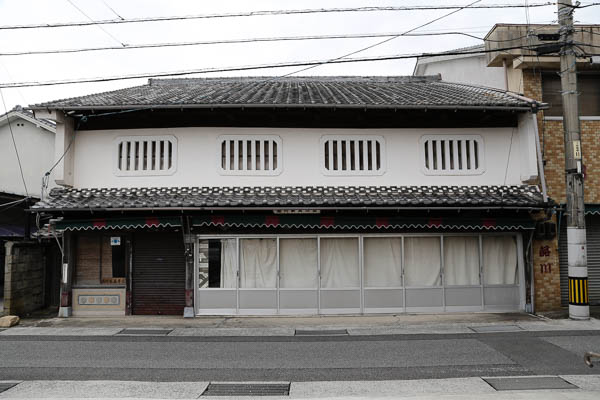
Hagi is one of the only Japanese cities where one can still navigate by 200-year-old maps from the Shogun's era, as its medieval townplan has remained largely untouched for centuries. These traditional Machiya houses with slatted windows and whitewashed walls, now extinct in most Japanese cities, are still quite common.


North of town centre stands arguably the most underrated attraction in an underrated city, a 400-year-old feudal neighborhood that has somehow survived into the 21st century. Once a bustling harbour district under the Mori lords, Hamasaki was a maritime crossroad for merchant fleets swapping smuggled medicine from Qing Dynasty China for dried seafood from Hokkaido and beyond.


We met the first of several exceptionally friendly curators at the former residence of Umeya Shichibei, a Sake-maker-turned-revolutionary-hero vital in smuggling a thousand British firearms that secured victory against the Shogun's armies. His 200-year-old house has now been partially modernized as a model for the protection and renewal of heritage residences in Hagi.


This charming waterfront district is just one of four neighborhoods in Hagi nationally designated as Important Traditional Architecture. The only other cities with the same level of distinction? Kyoto of course, plus beautiful Kanazawa.


Further down the street we were greeted at the Yamanaka Residence by another cheery curator, who subsequently introduced us to two more elderly curators eager to present their cultural heritage to two awestruck Canadians, despite mutual difficulties in communication.


The friendliness of the staff went miles beyond what one would expect at tourist-crazy Kyoto or worst still, metropolitan Tokyo. Our curator simply asked a friend to cover his post, lent us a 2-person umbrella and took us around the neighborhood as our personal guide for free. The first stop was a large stone structure with a locked gate which he had the keys to open.


Revealed before our eyes was a medieval dry dock, capacious enough for the Daimyo's seafaring ships, now situated three blocks from shore as the river delta became silted over the centuries. It was a shame to see these heritage buildings locked up most of the time, rarely visited even among domestic Japanese tourists.


Our curator then brought us to another locked building, a discreet 19th century warehouse holding some colossal lanterns and an obviously antique Mikoshi shrine, ornamented with sparkling gold leaves and fashioned in the form of a fishing boat with wheels. Apparently this was the sacred centerpiece of the parade at their annual Natsu Matsuri festival.


We must have spent nearly two hours in the neighborhood before bidding farewell to our gracious curators, certainly the friendliest we encountered on our 16-day journey. In better weather we could have taken the free ferry that bridged Hamasaki with the residential neighborhood of Tsurue across the river, but on this drizzly day we opted for the next Maru Bus to our hotspring Ryokan.


As expected our luggage was already waiting for us at the Ryokan ... along with the allure of a hotspring bath. Needless to say we lost the willpower to set foot outside our Ryokan for the rest of the day, spent mostly between the communal bathhouse and the dining hall where a traditional dinner of (what else?) poisonous Fugu was served. Most of the sightseeing would be left for Day 2.